Fort Science

A kid-friendly terrain lab for Hadrian's Wall: real 1 m ground data, fort footprints, route profiles, drainage puzzles, sightline experiments and engineering challenges.

Science Charts

The Wall Rollercoaster

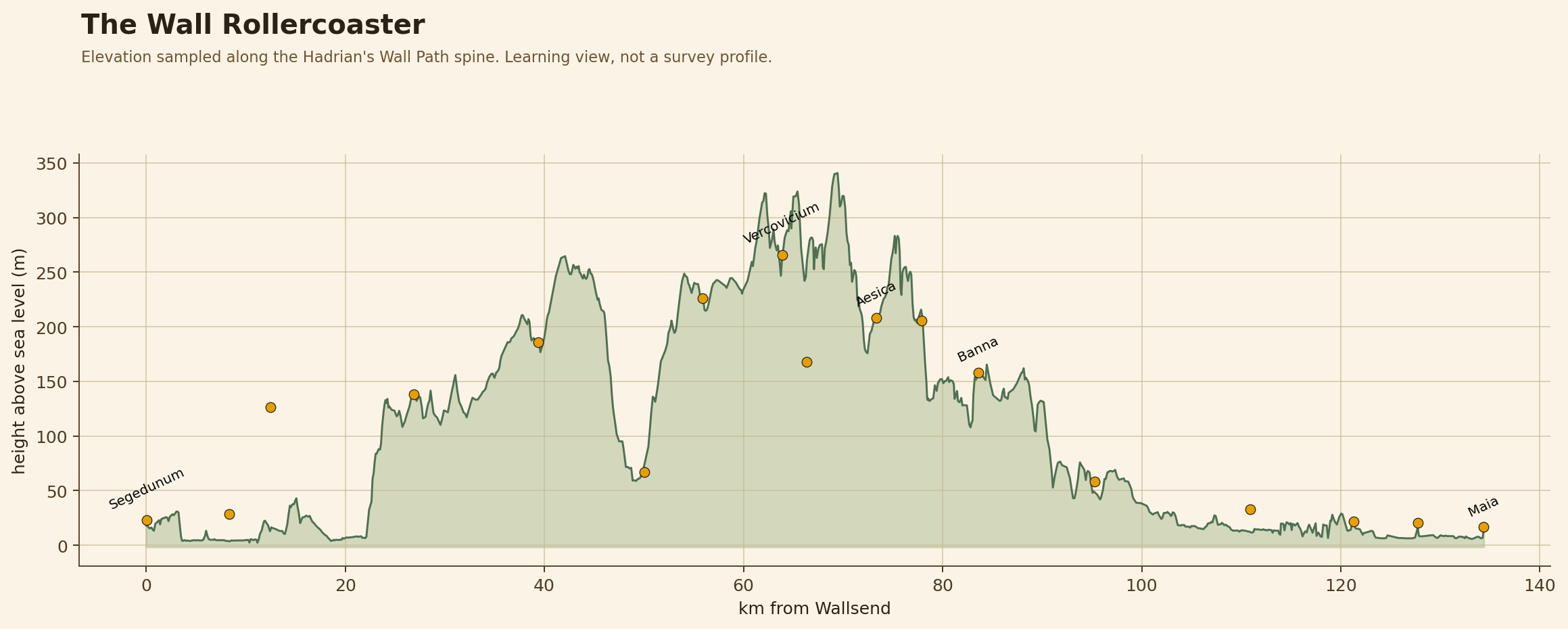
The Wall Rollercoaster

Route elevation from Wallsend to Bowness, with key forts marked.
Steepest forts

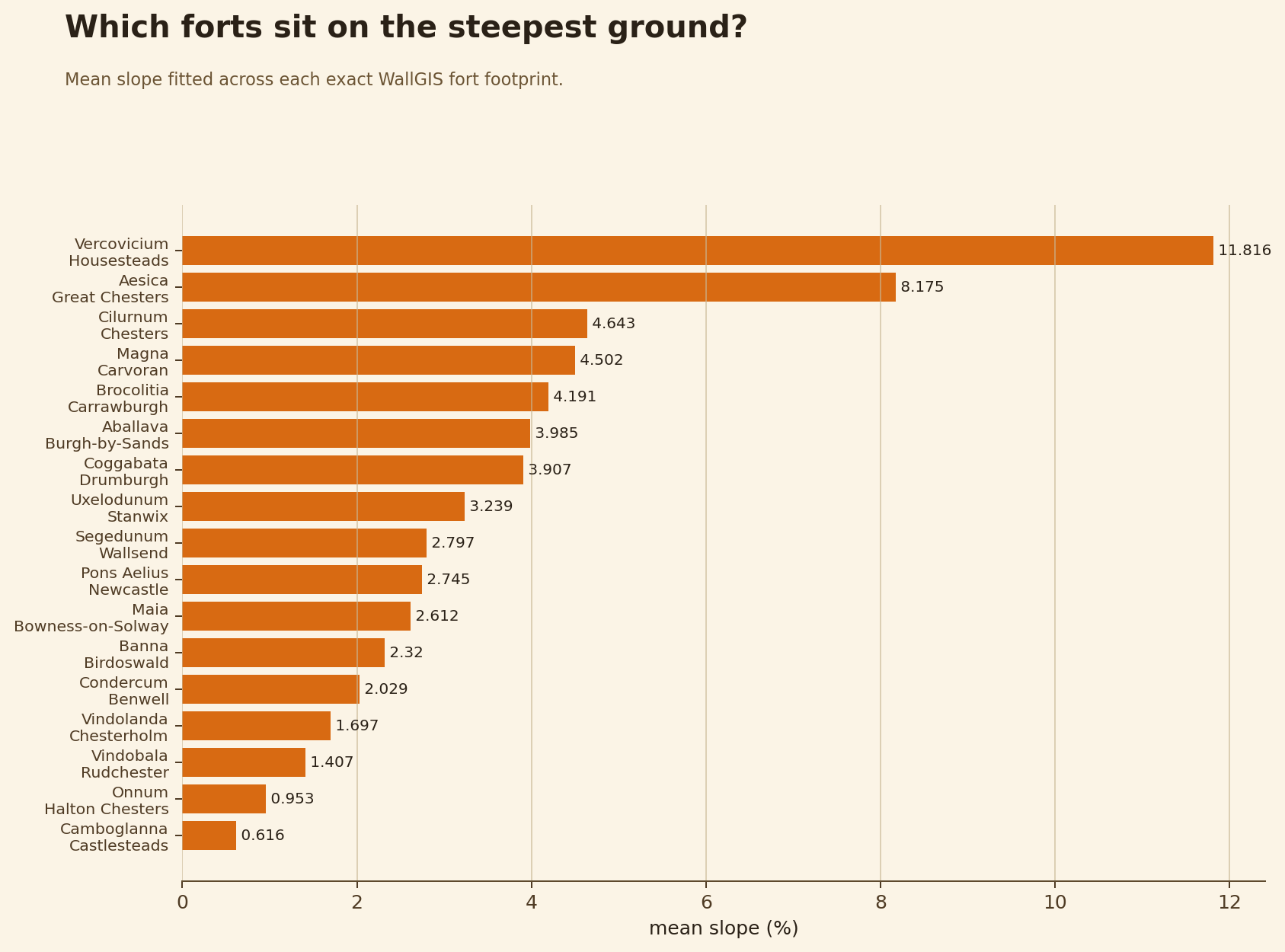
Steepest forts

A rank chart: kids can instantly see Housesteads is the hard one.
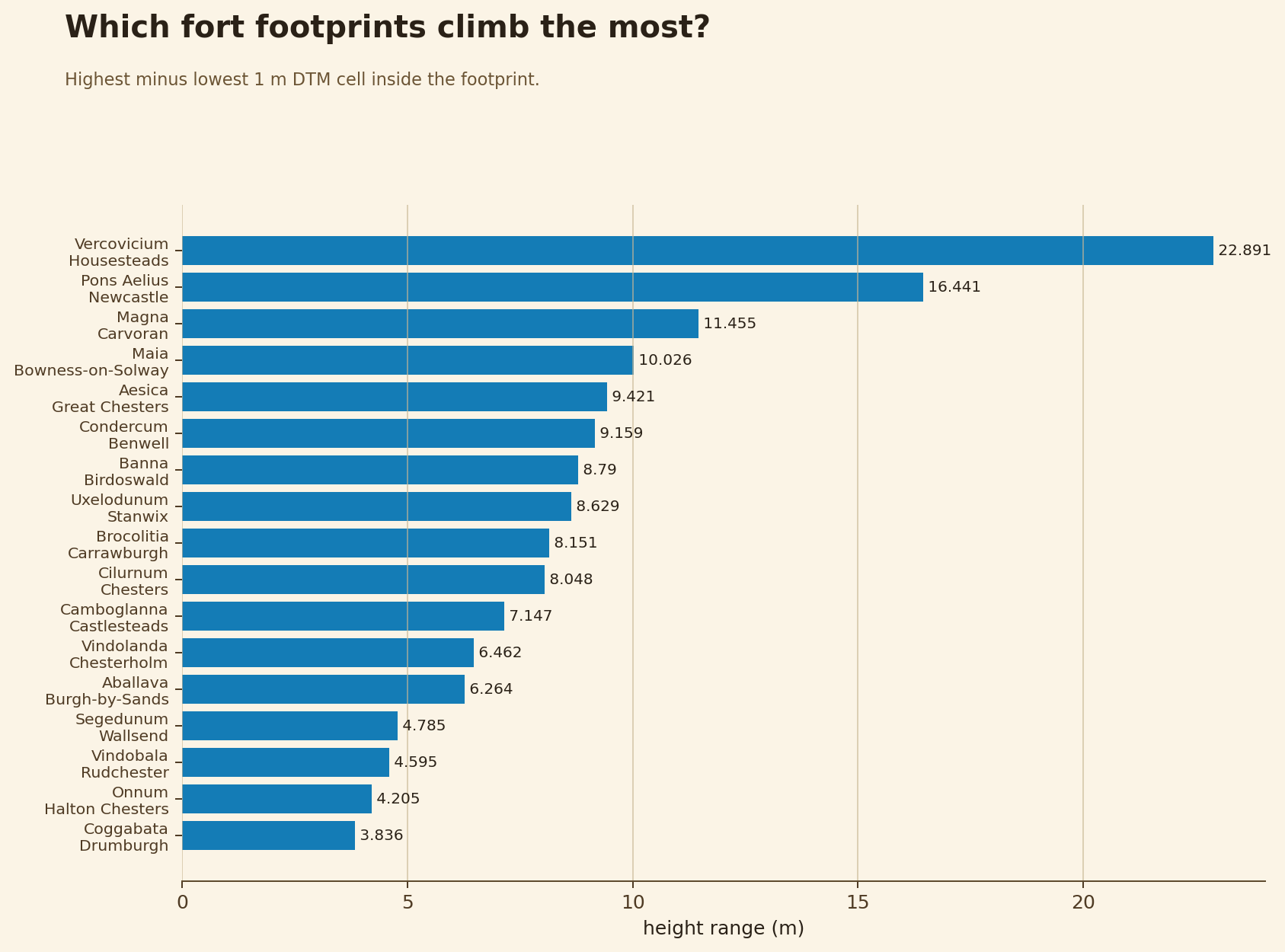
Biggest height range

Biggest height range

Which fort footprints climb most from low side to high side.
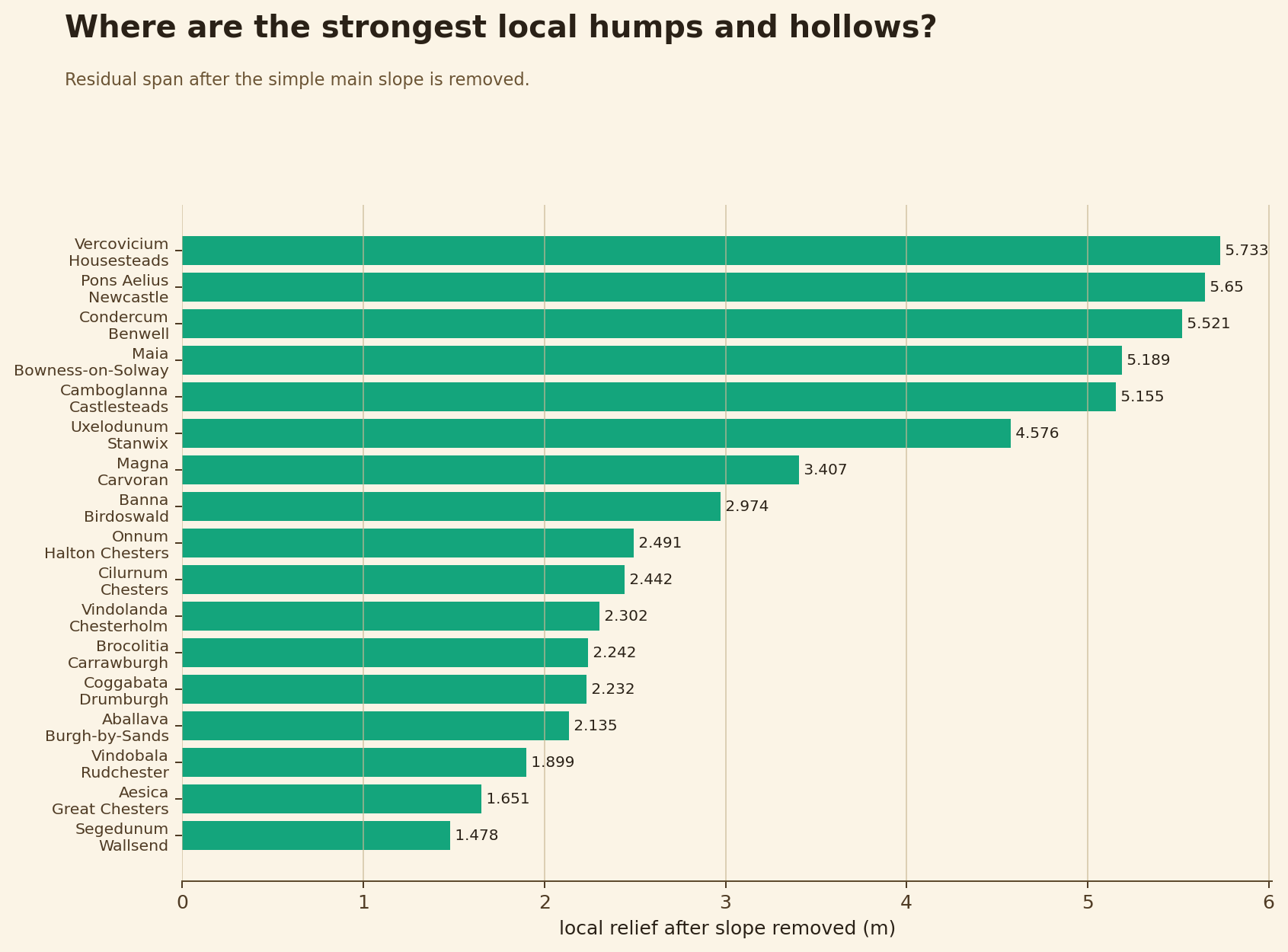
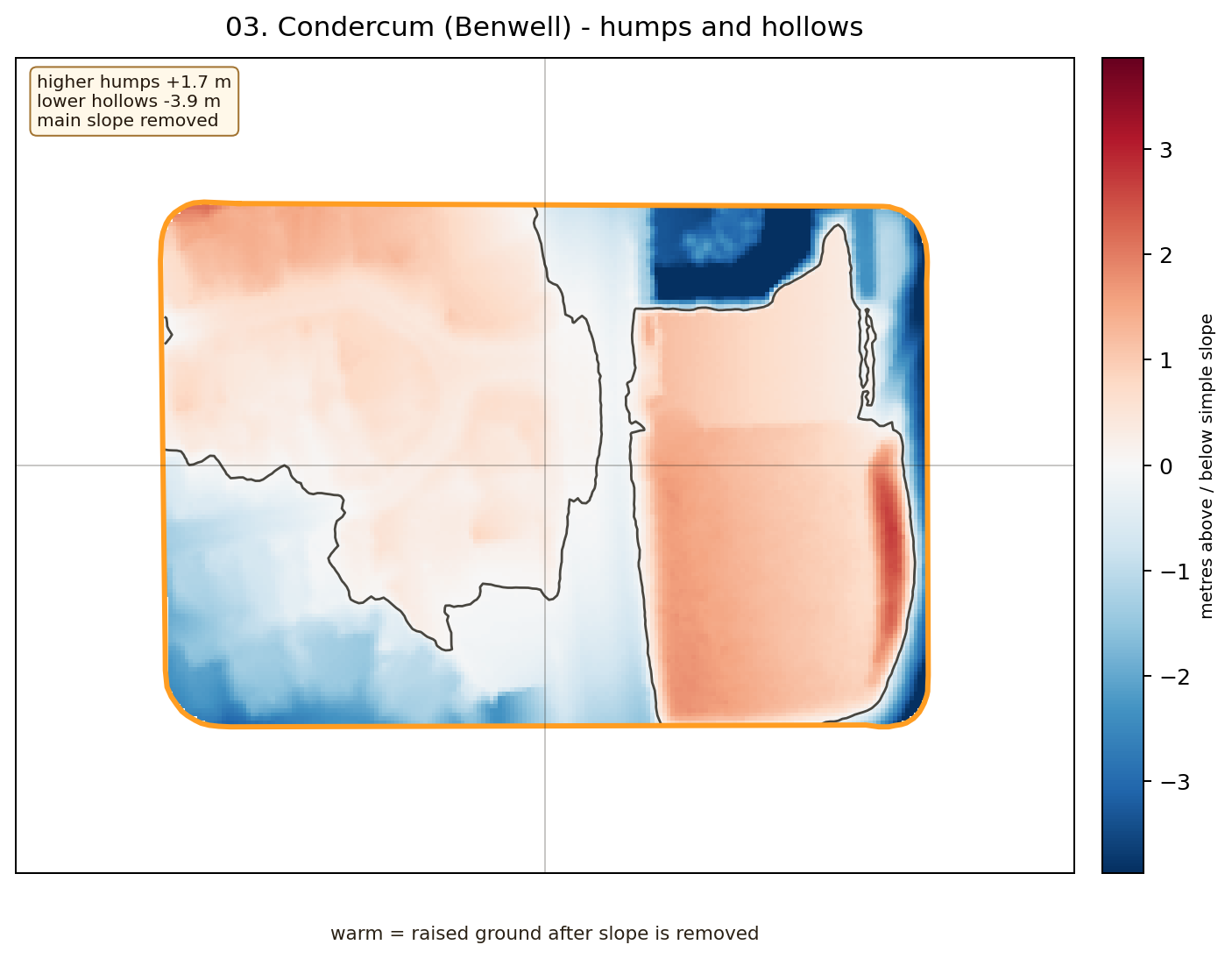
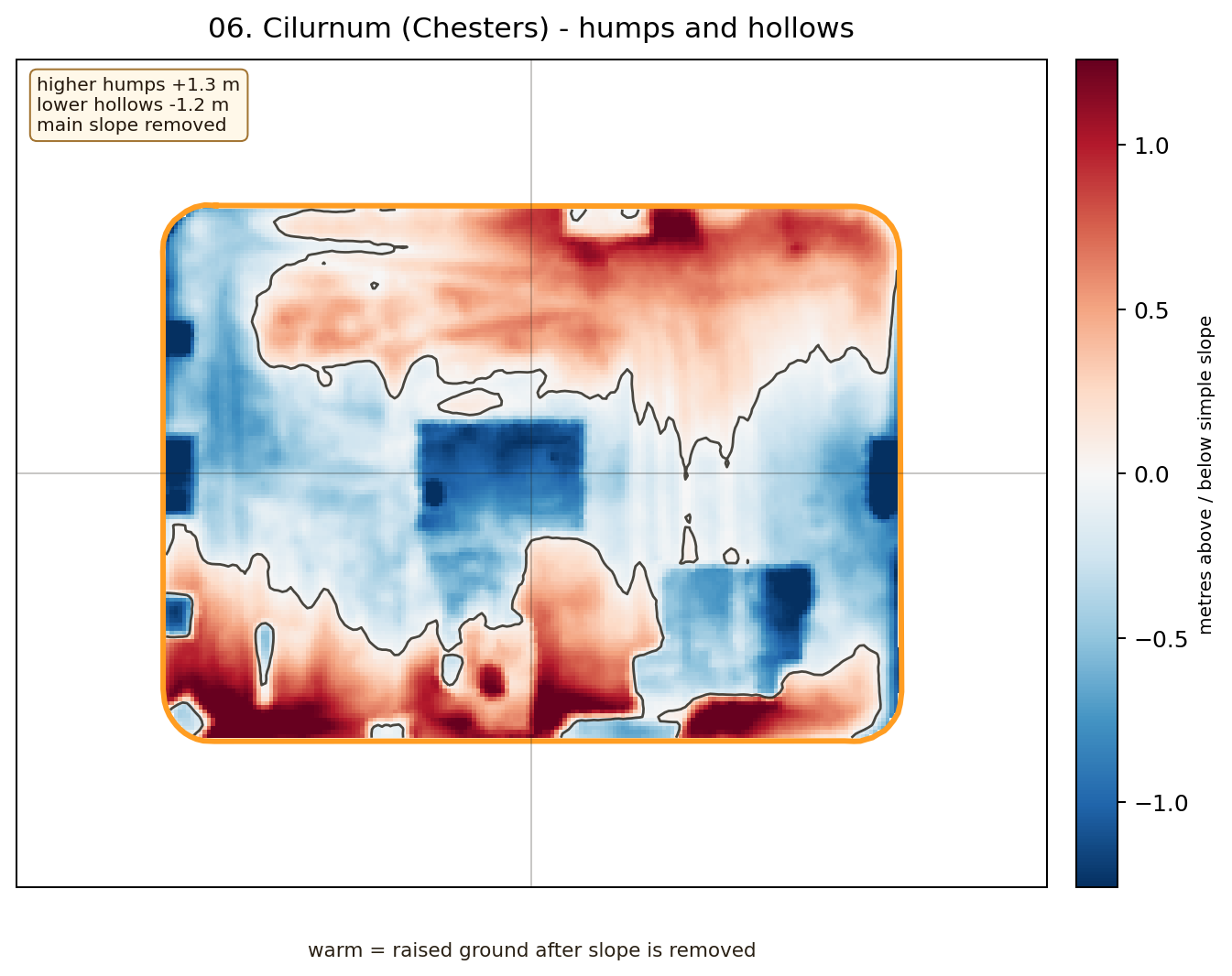
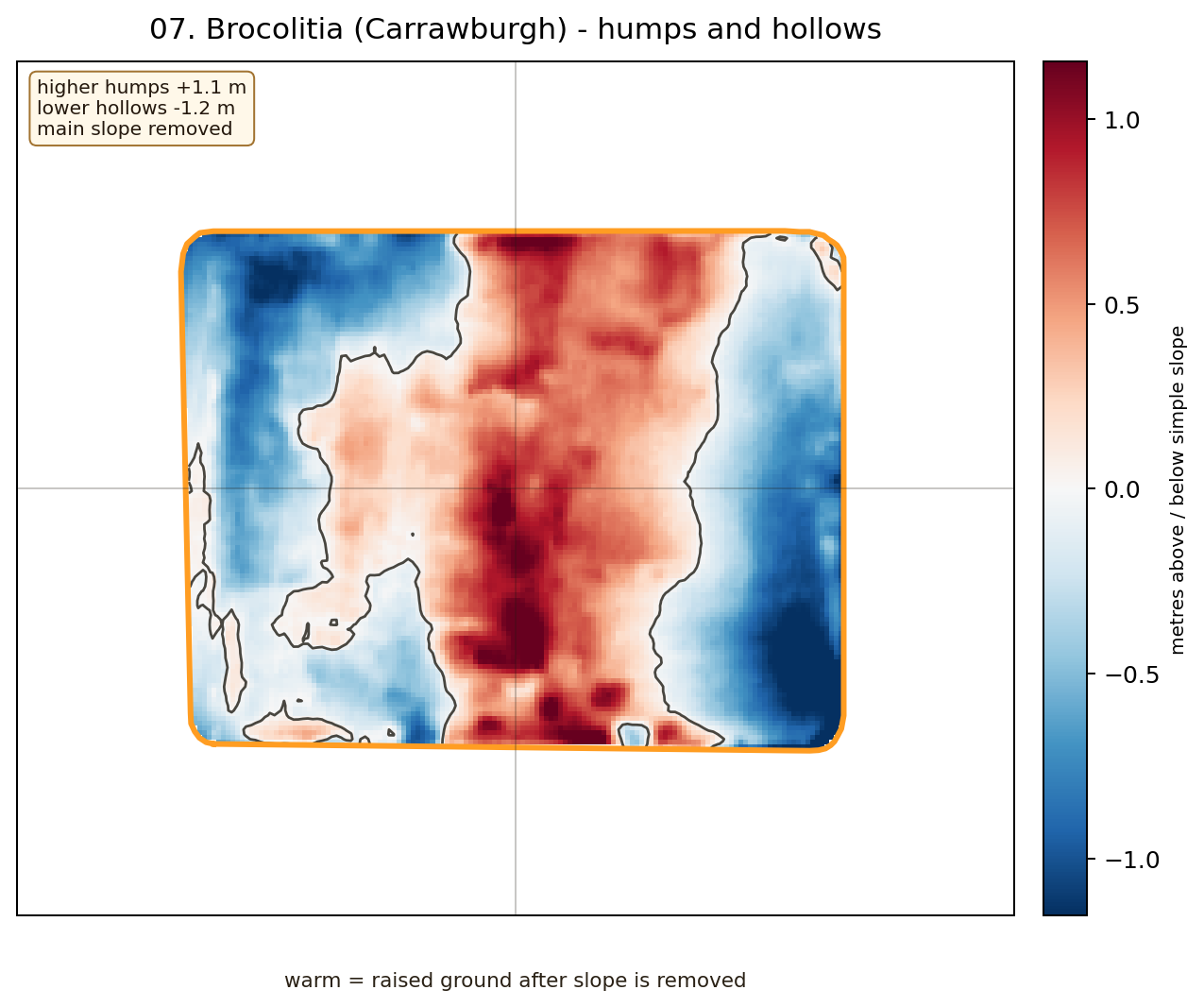
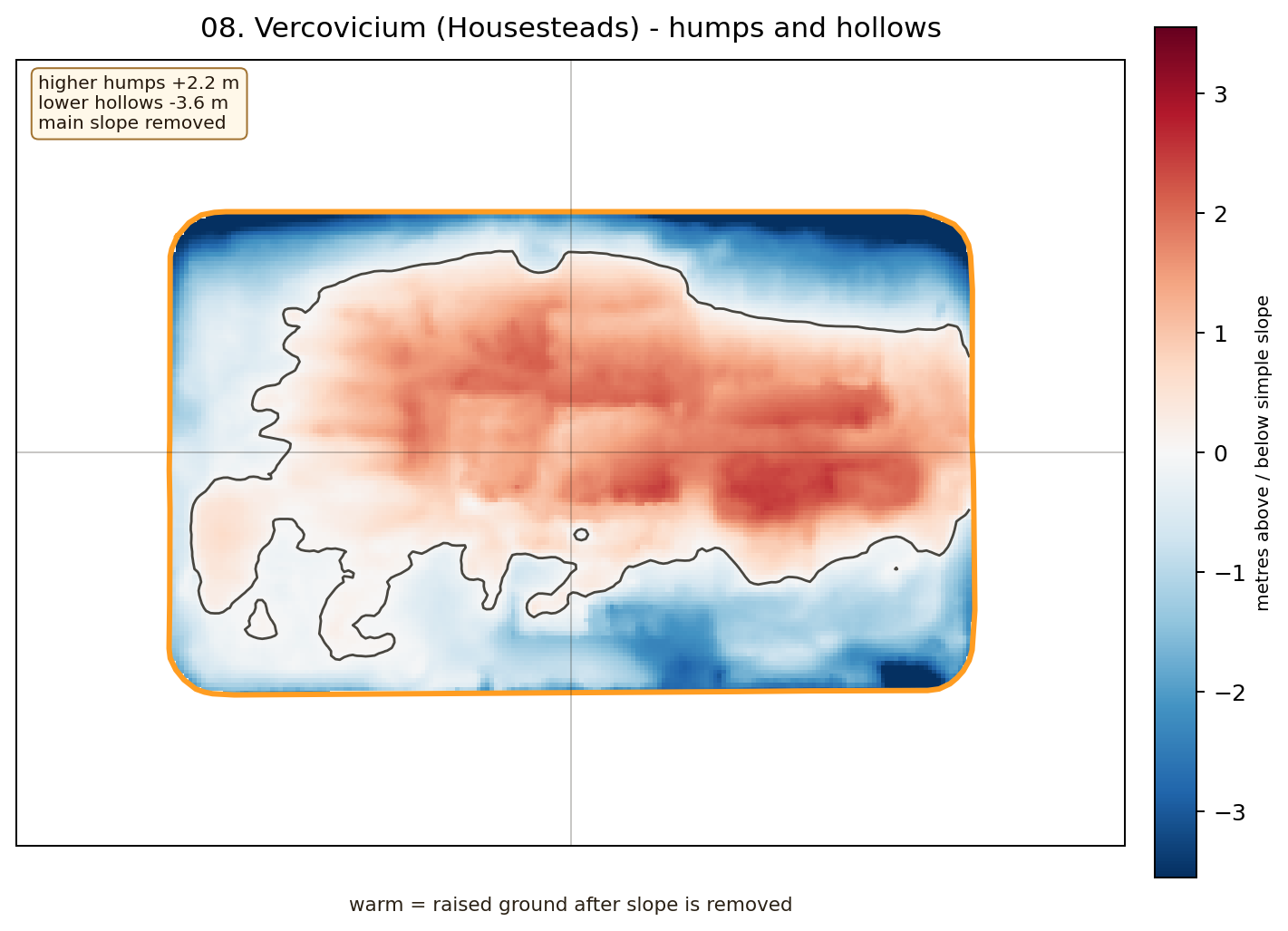
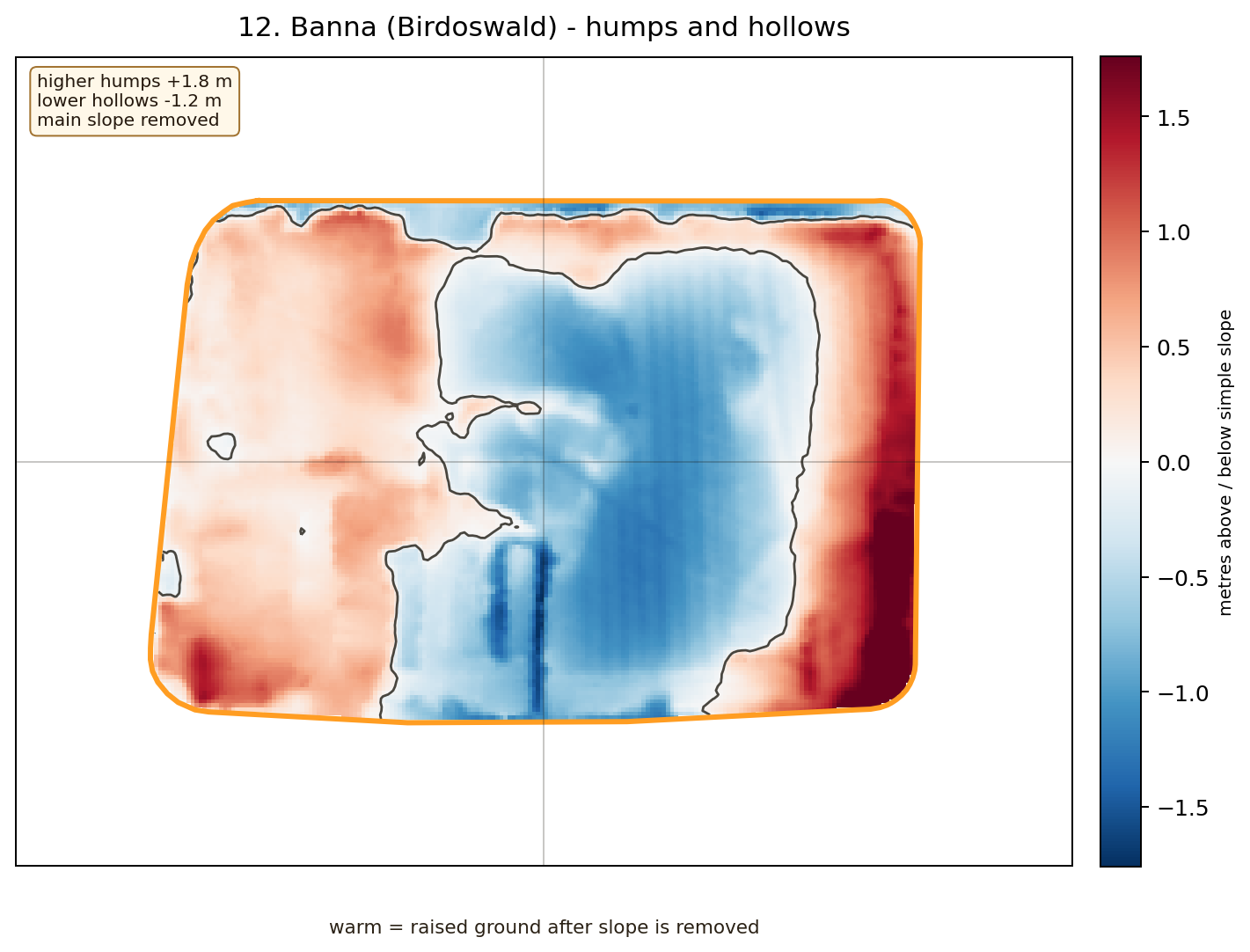
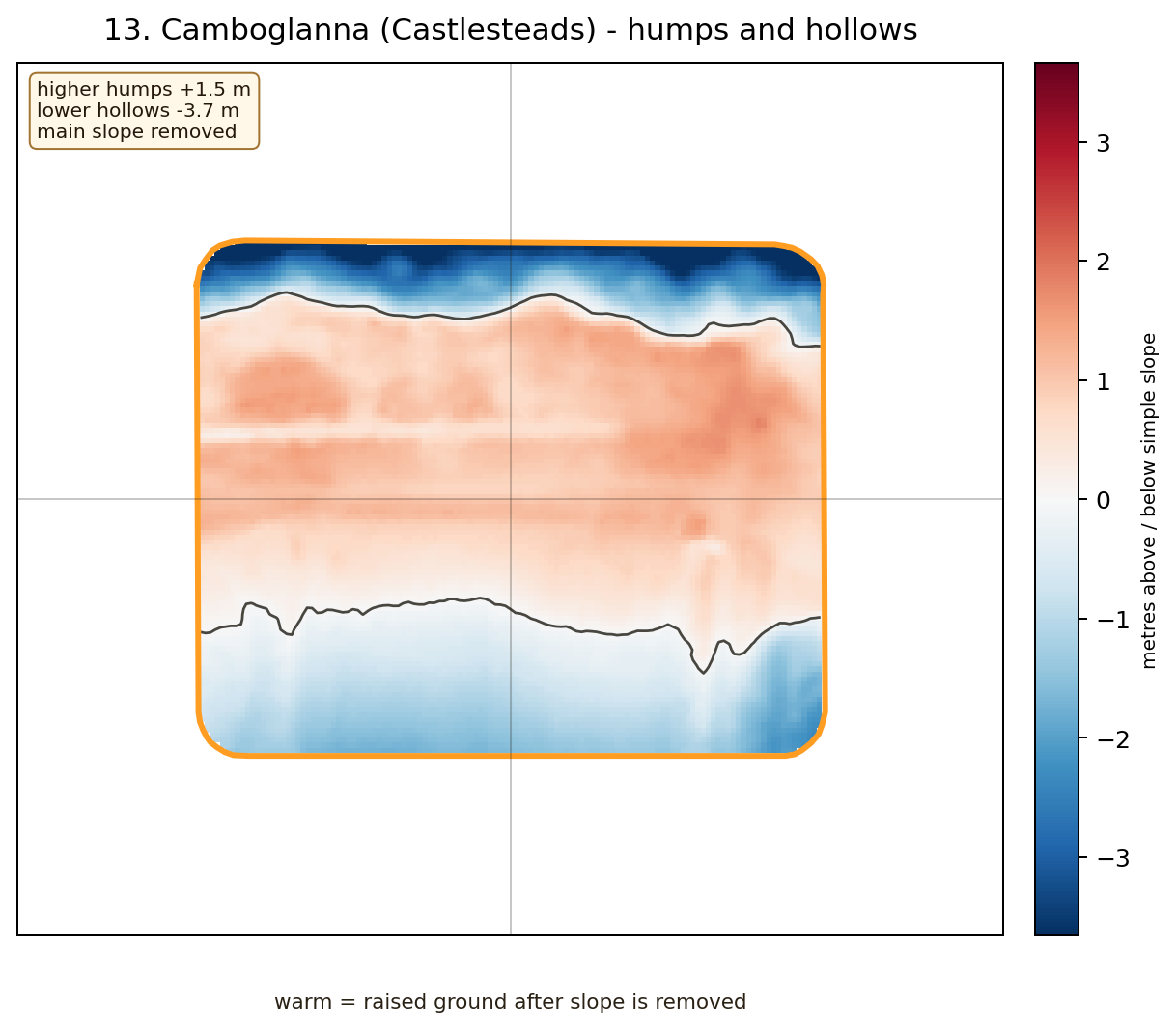
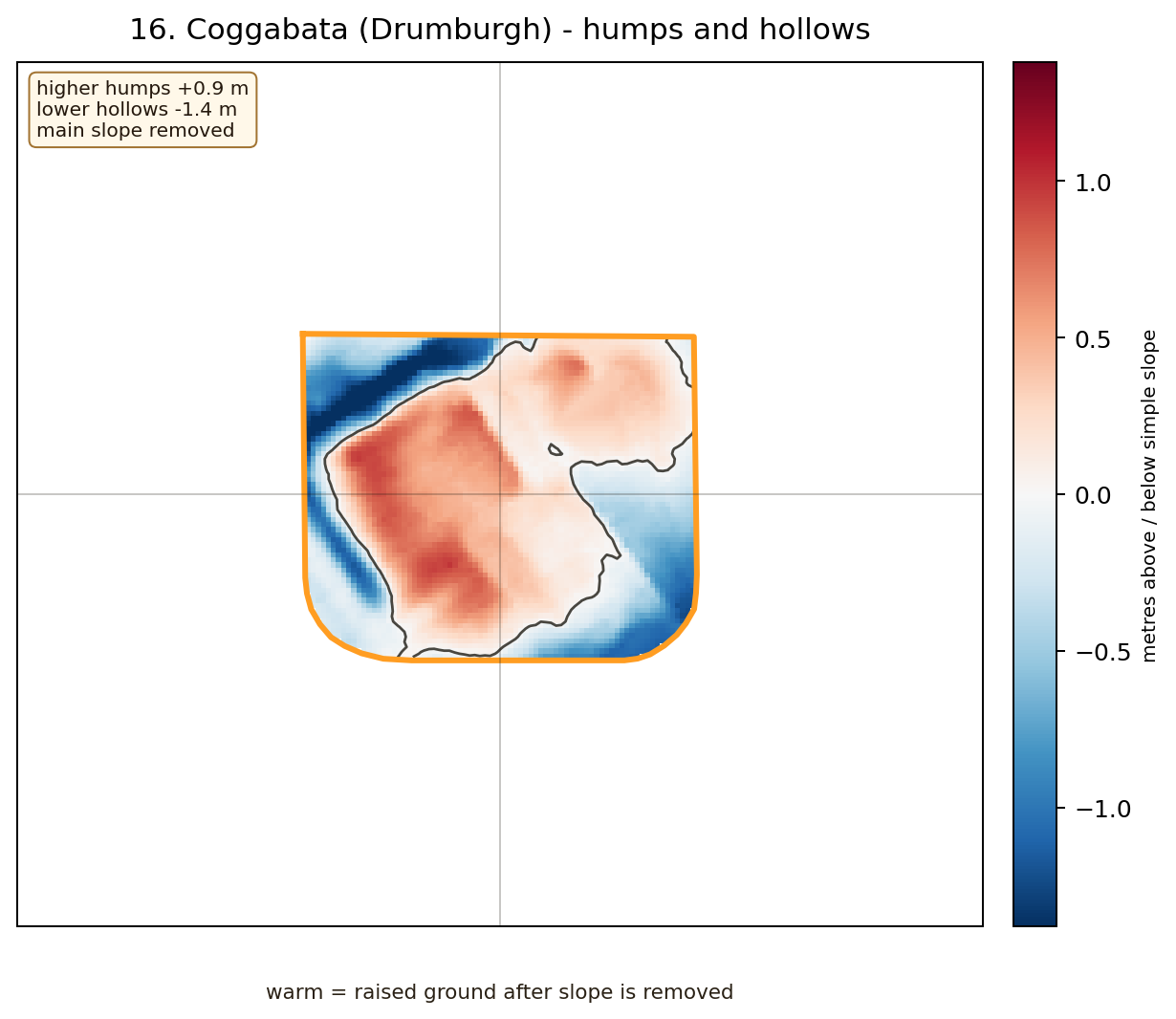
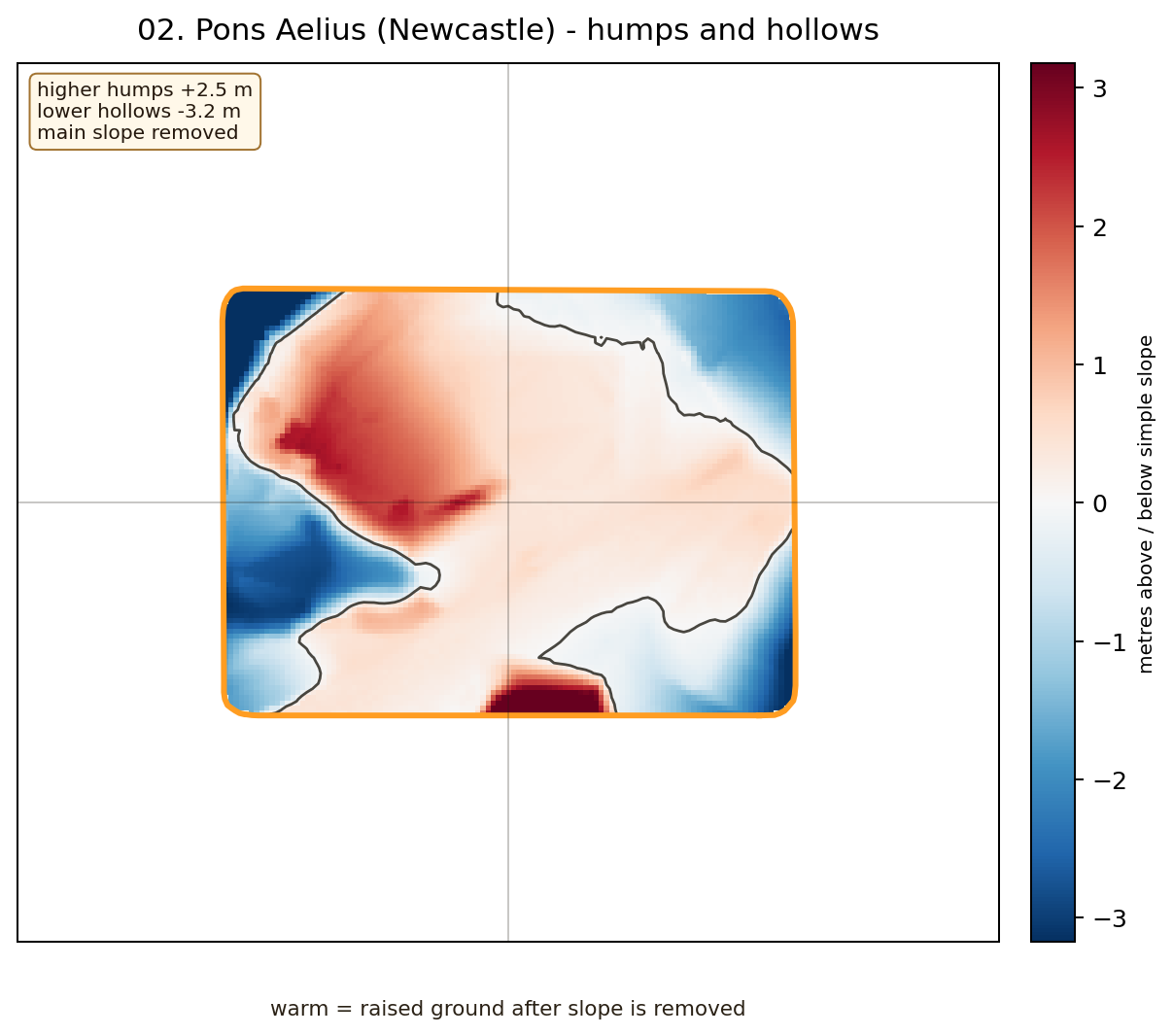
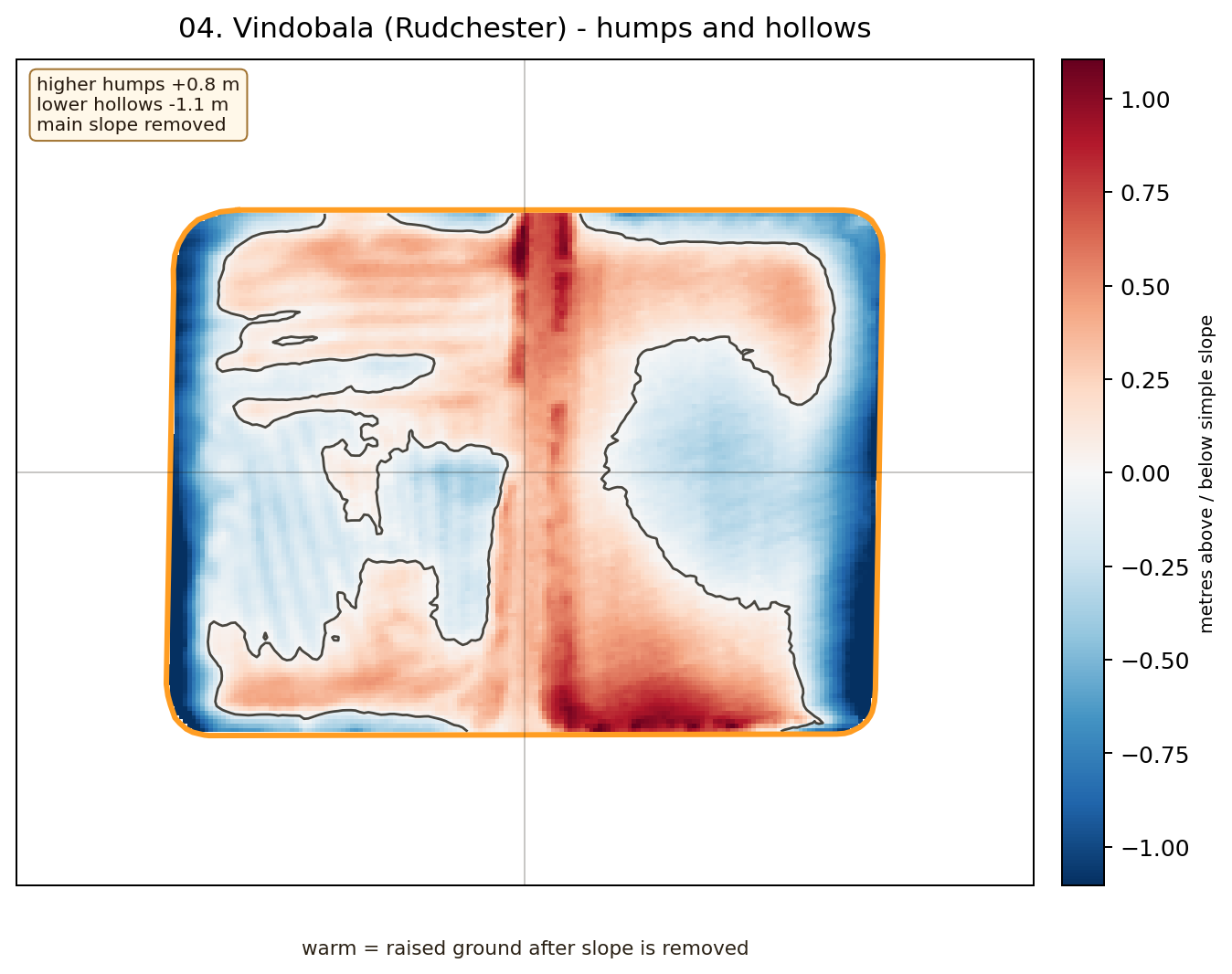
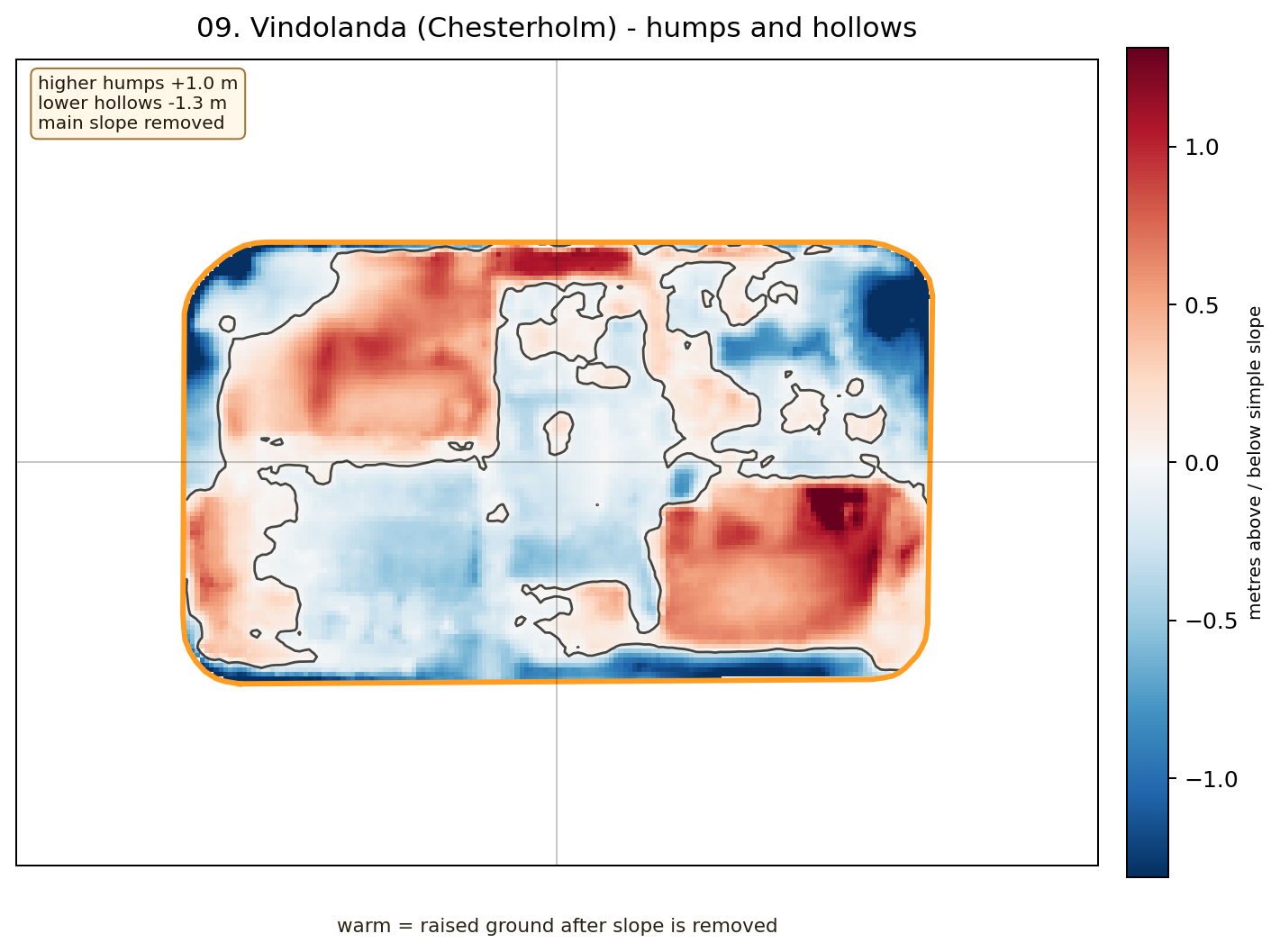
Humps and hollows

Humps and hollows

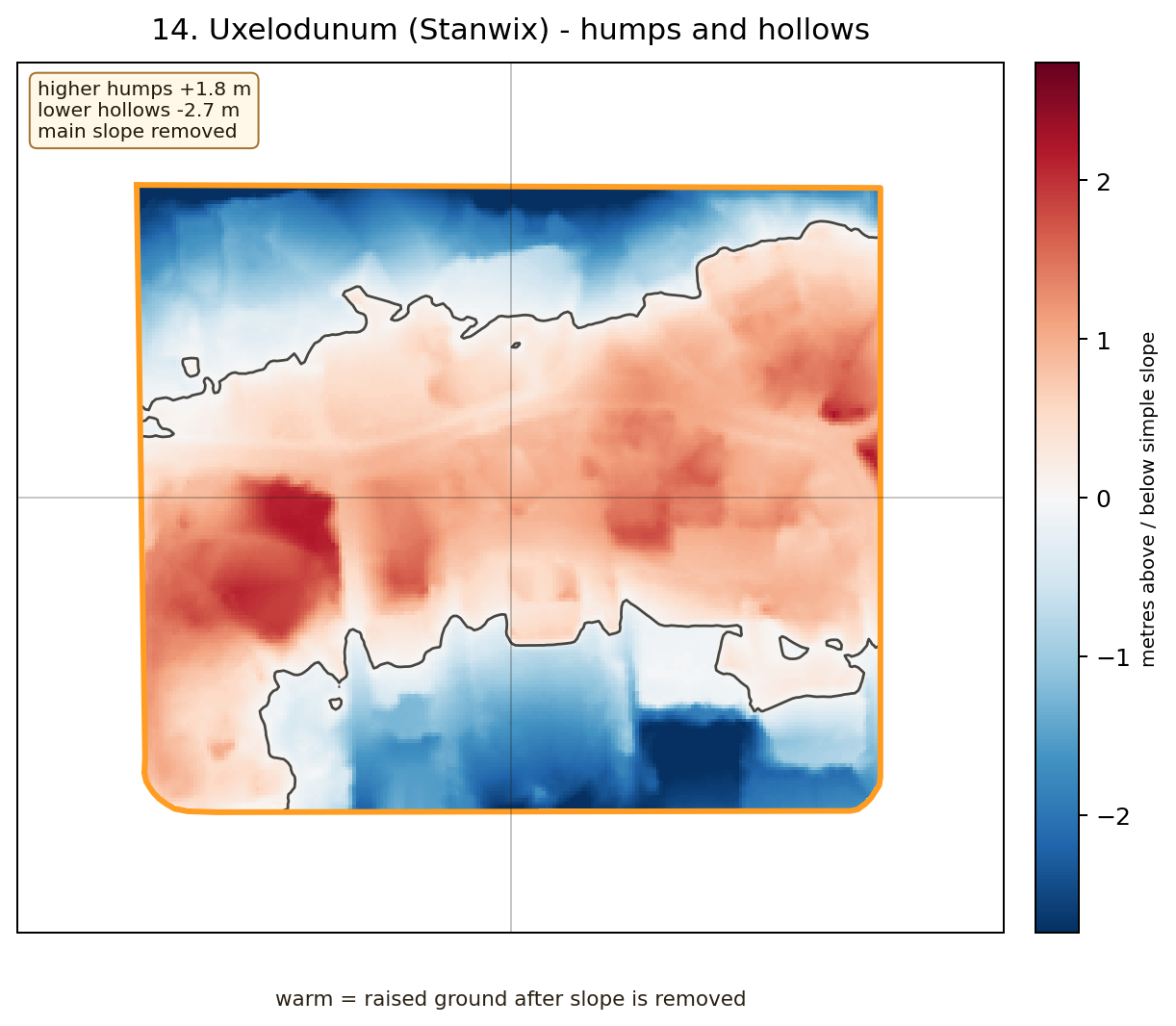
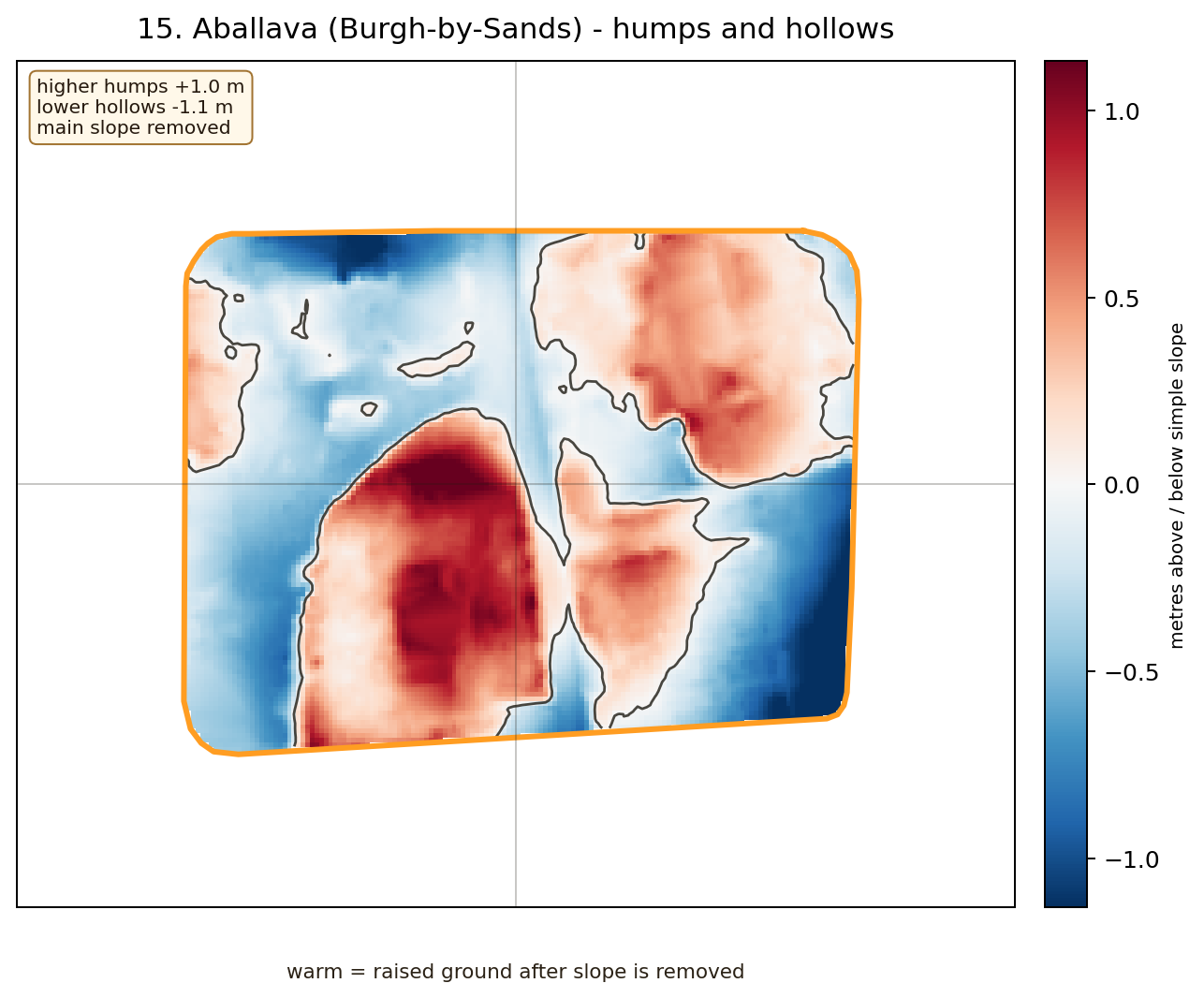
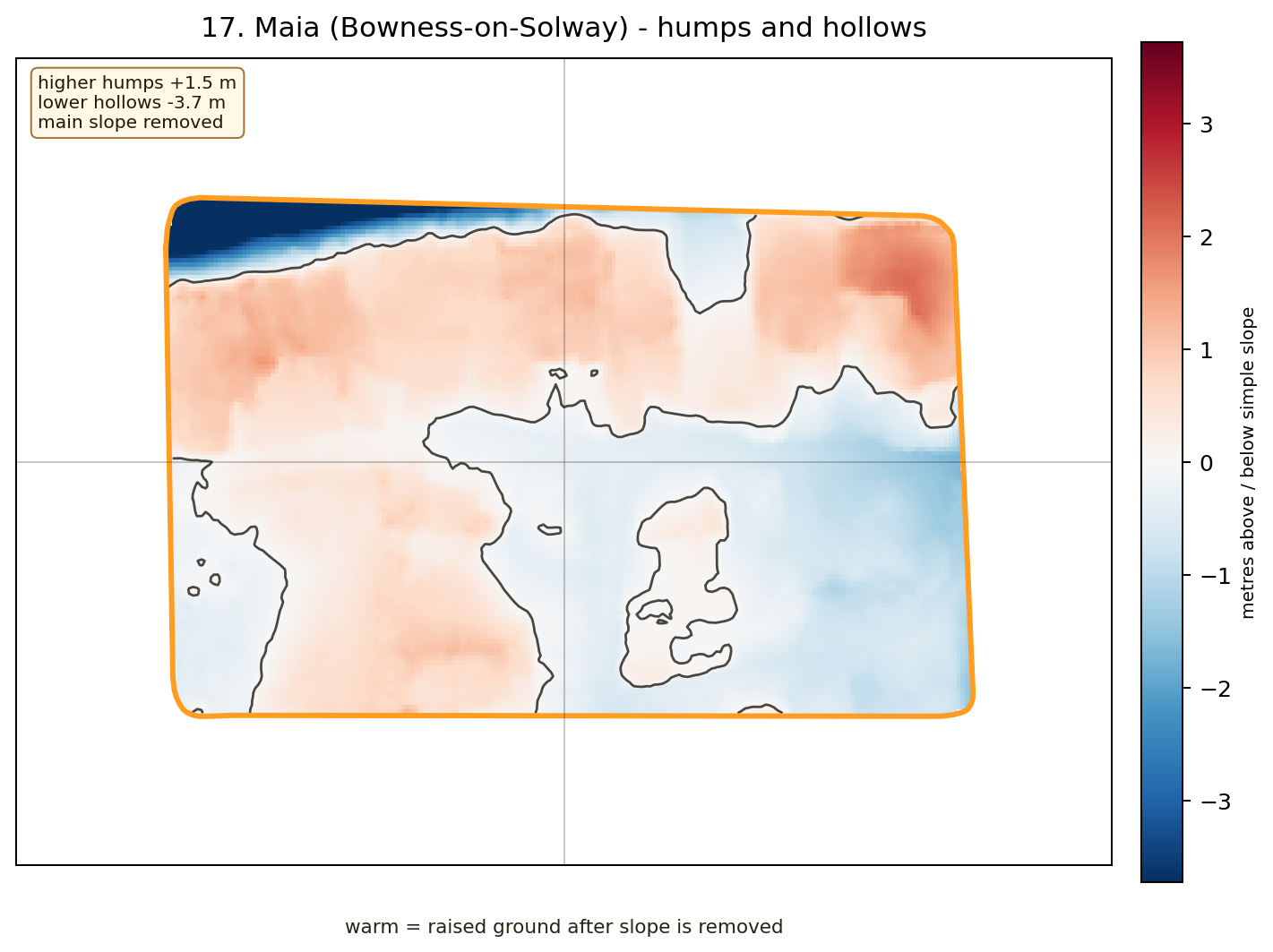
Where local ground shapes remain after the main slope is stripped away.
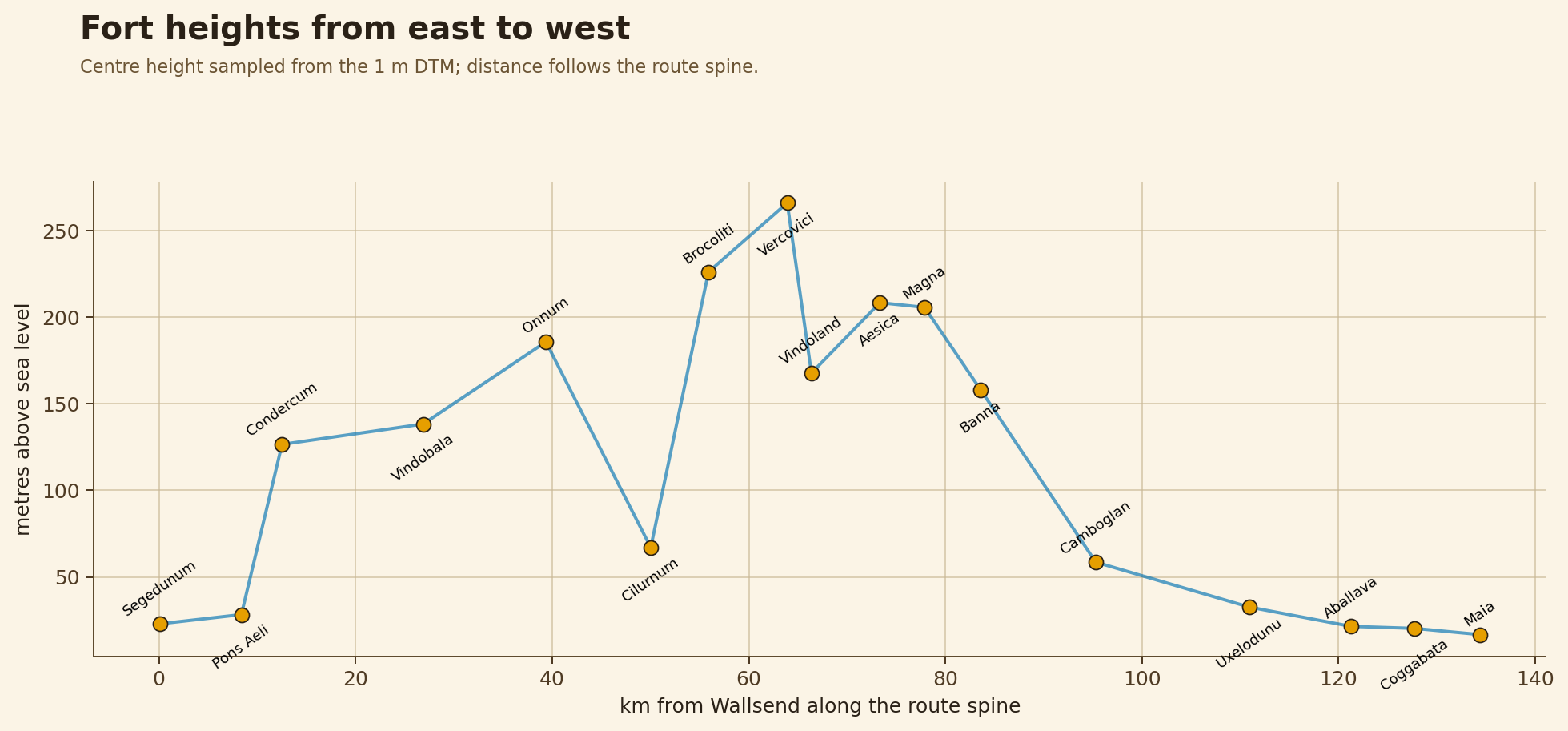
Fort heights east to west

Fort heights east to west

Fort centre heights along the walk.

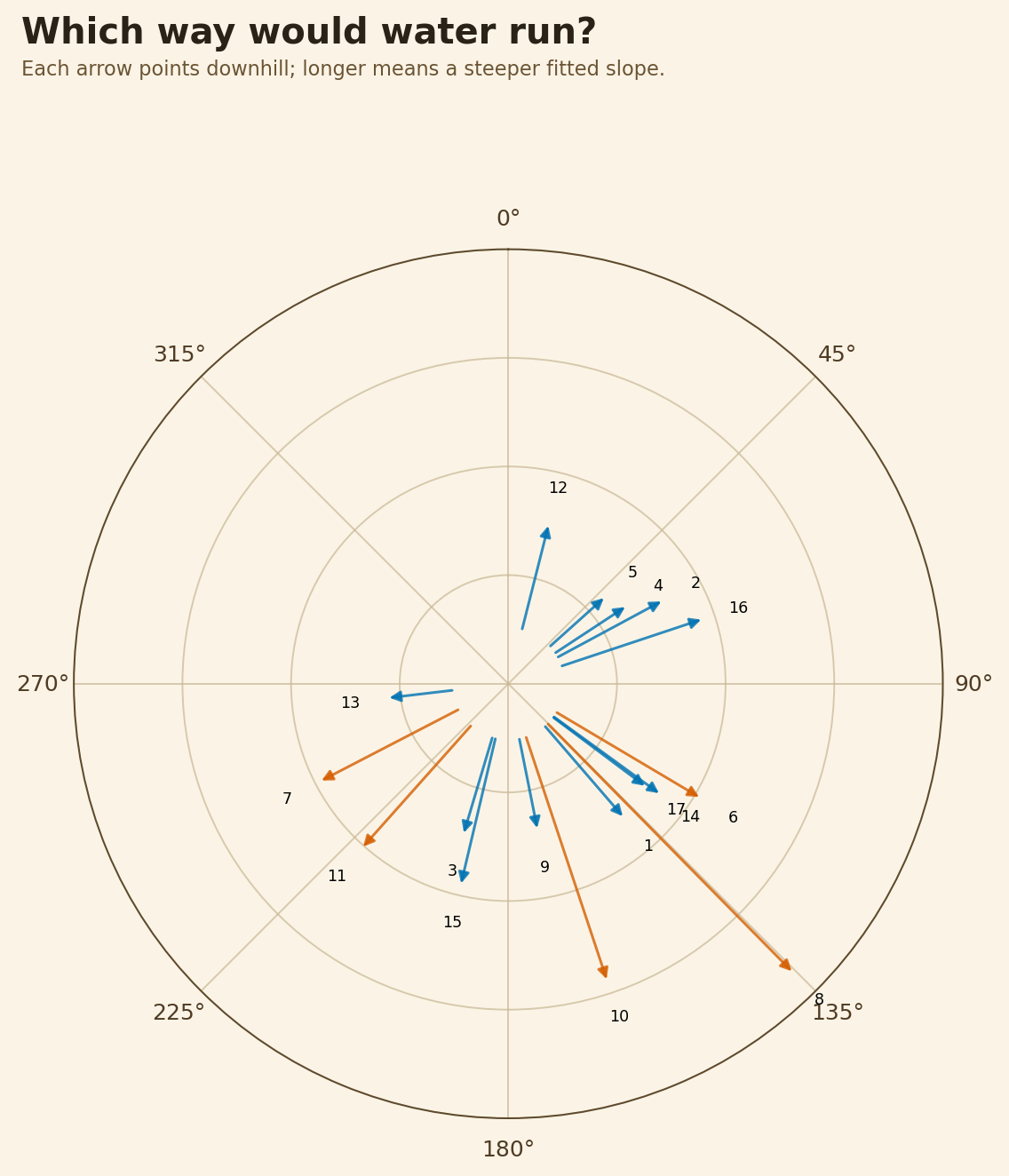
Water runs this way

Water runs this way

Downhill bearings as a compass puzzle.
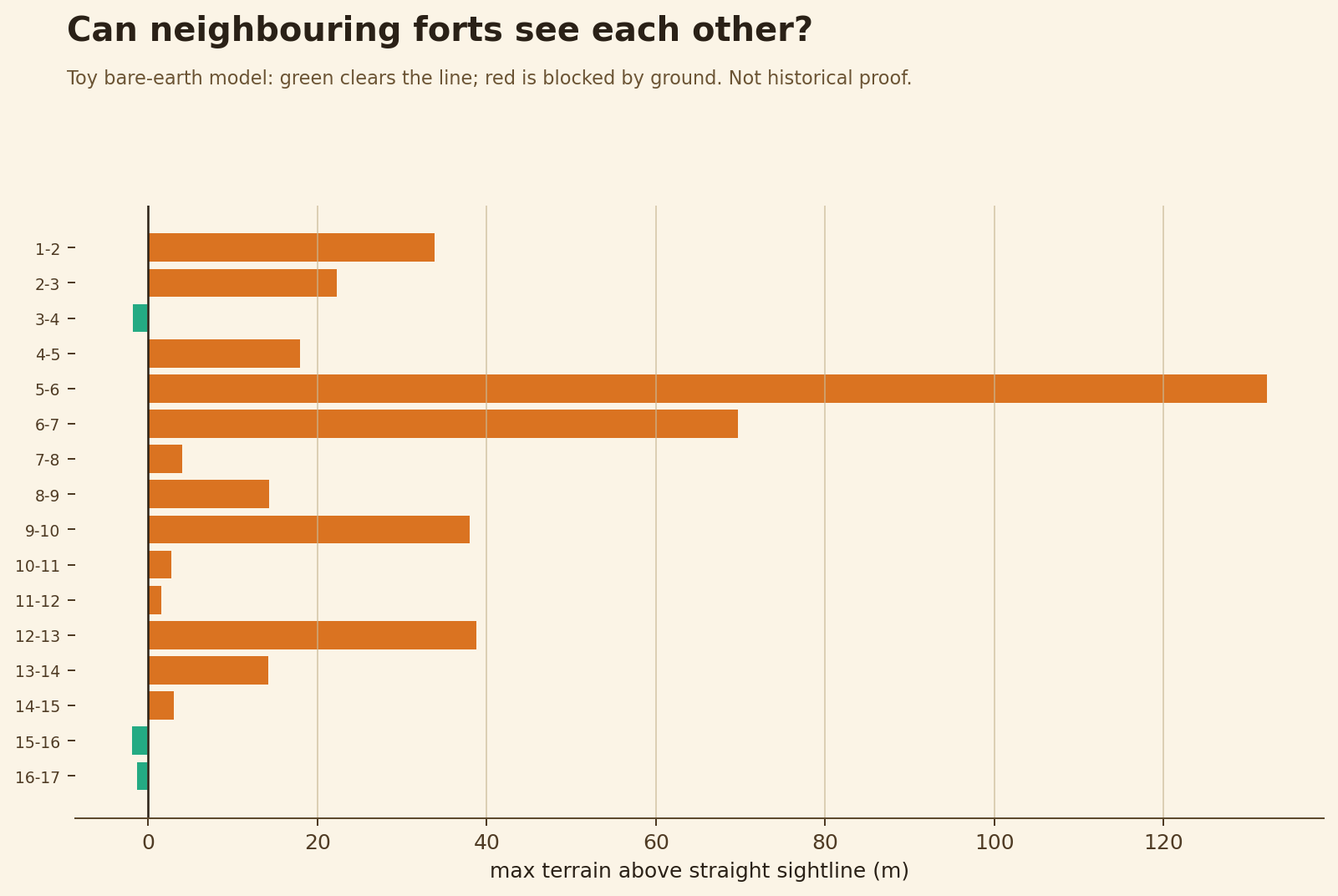
Sightline science

Sightline science

A simple terrain-only visibility test between neighbouring forts.
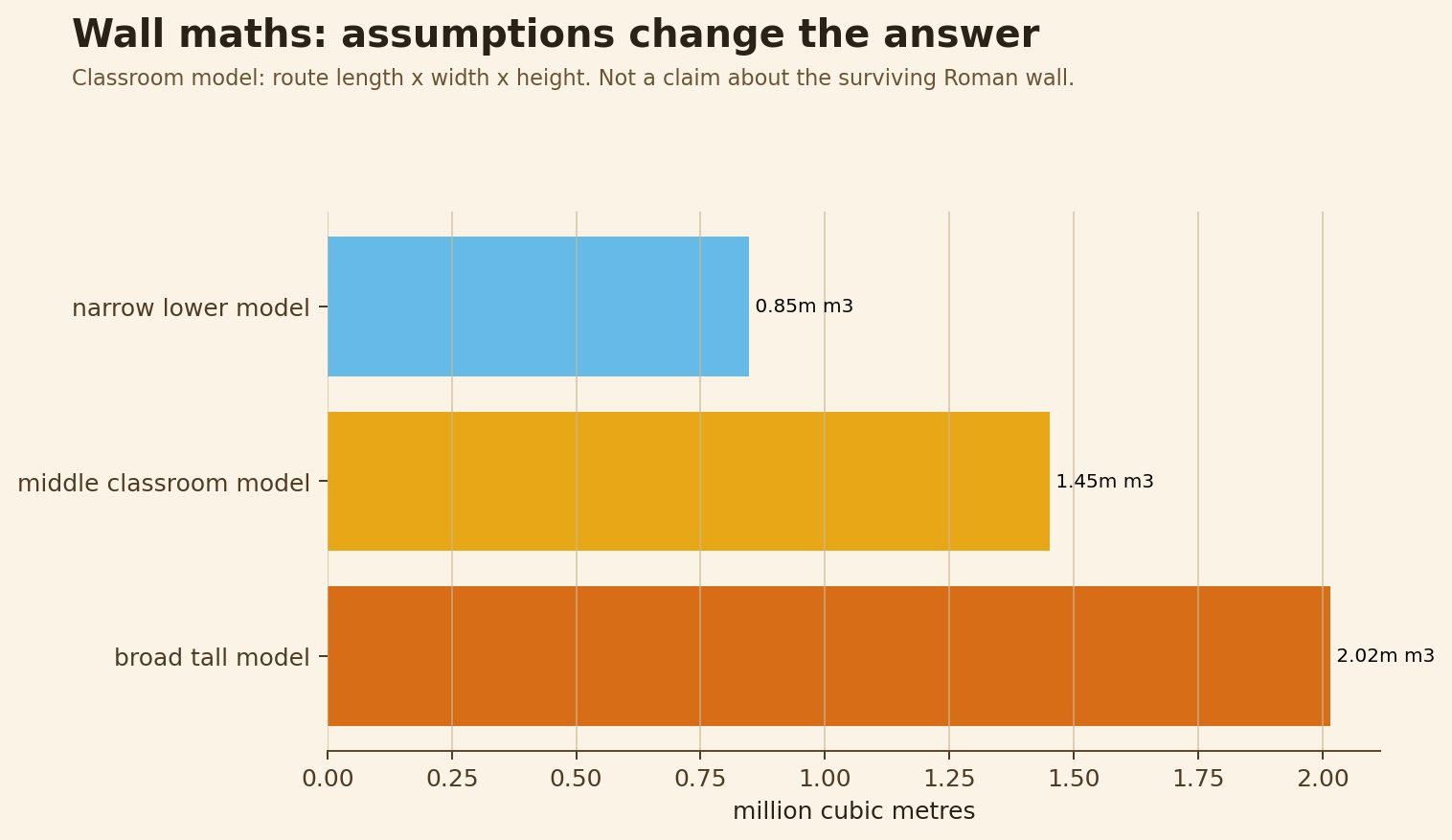
Wall maths

Wall maths

How much stone changes when width/height assumptions change.

Fort Science Cards

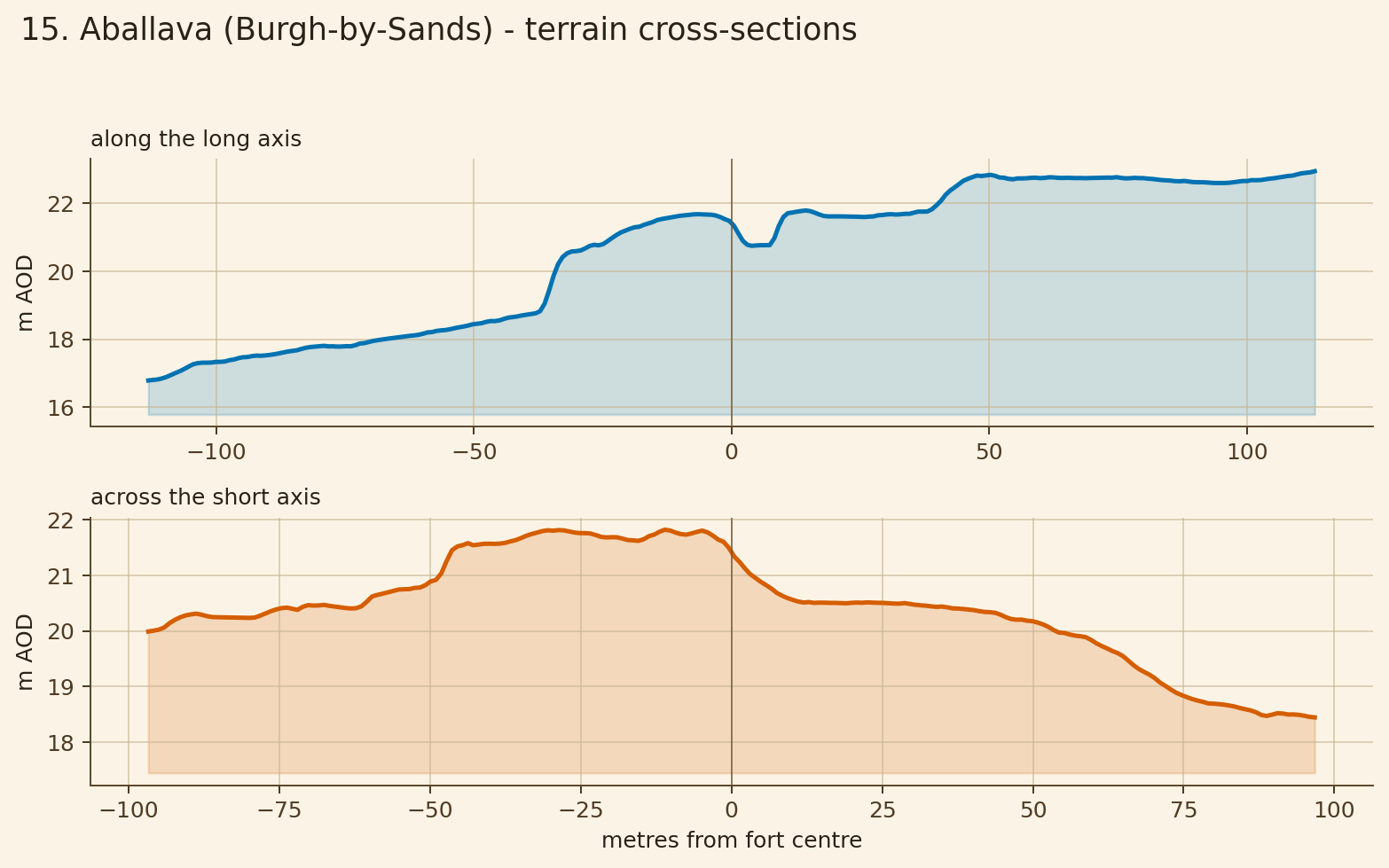
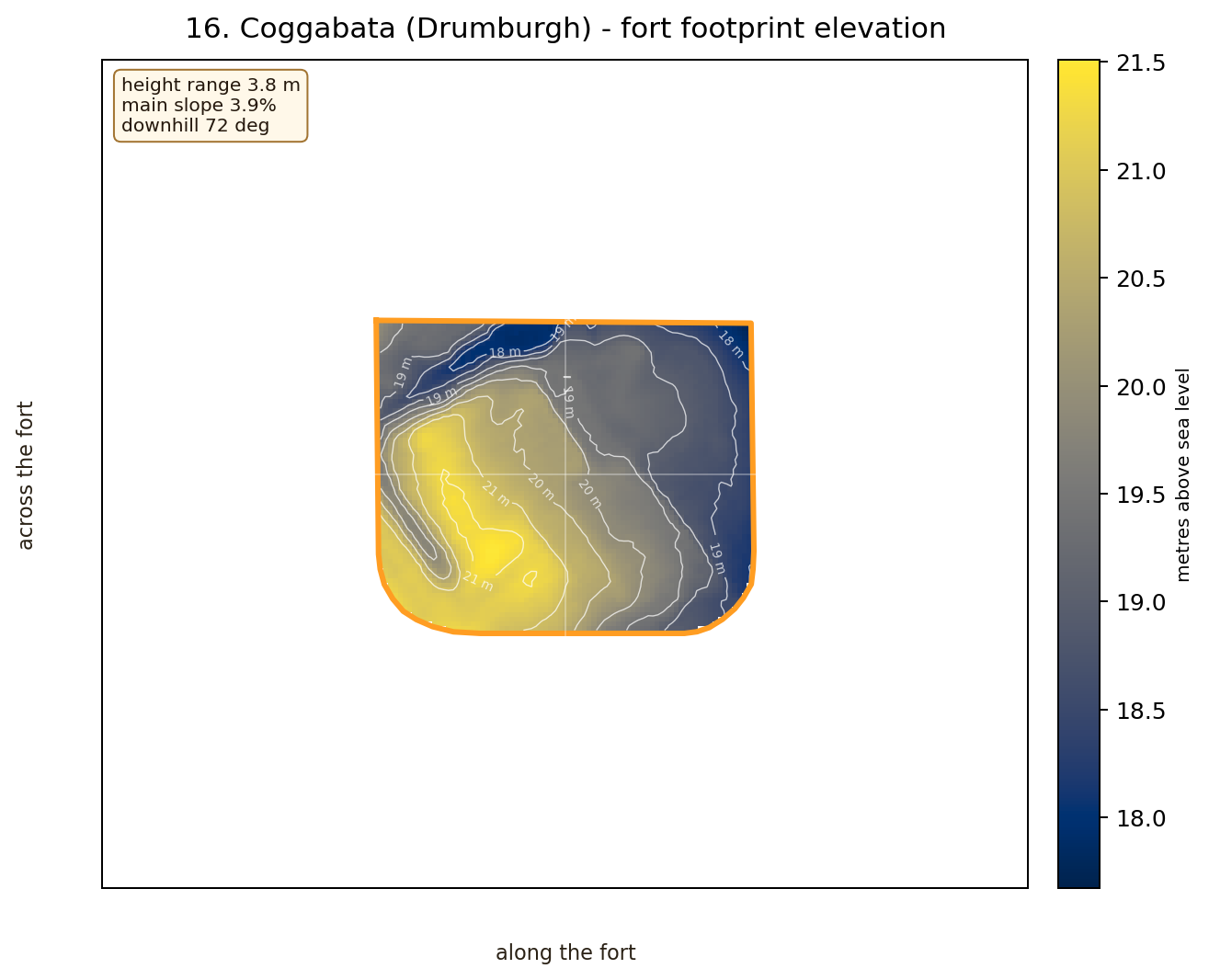
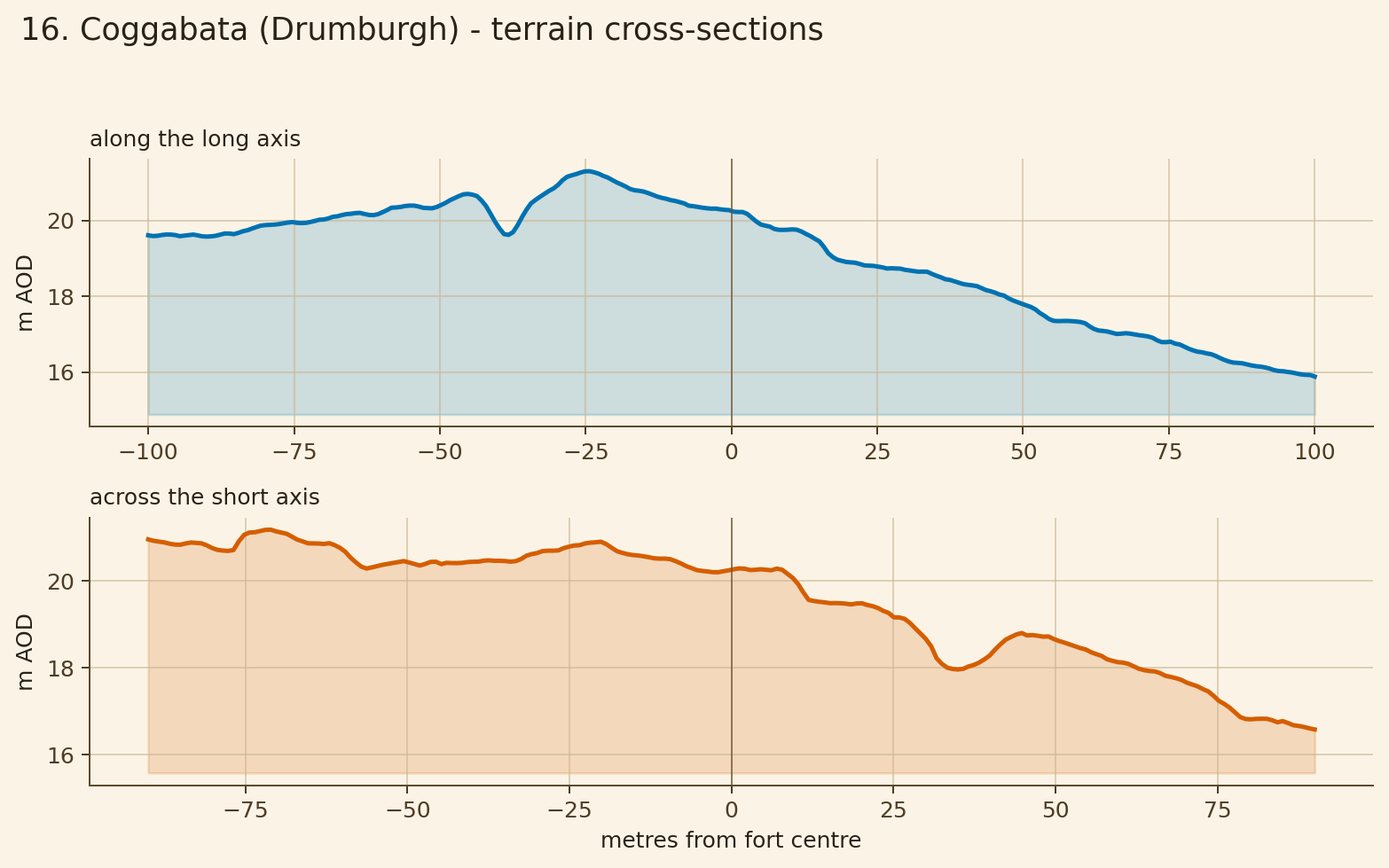
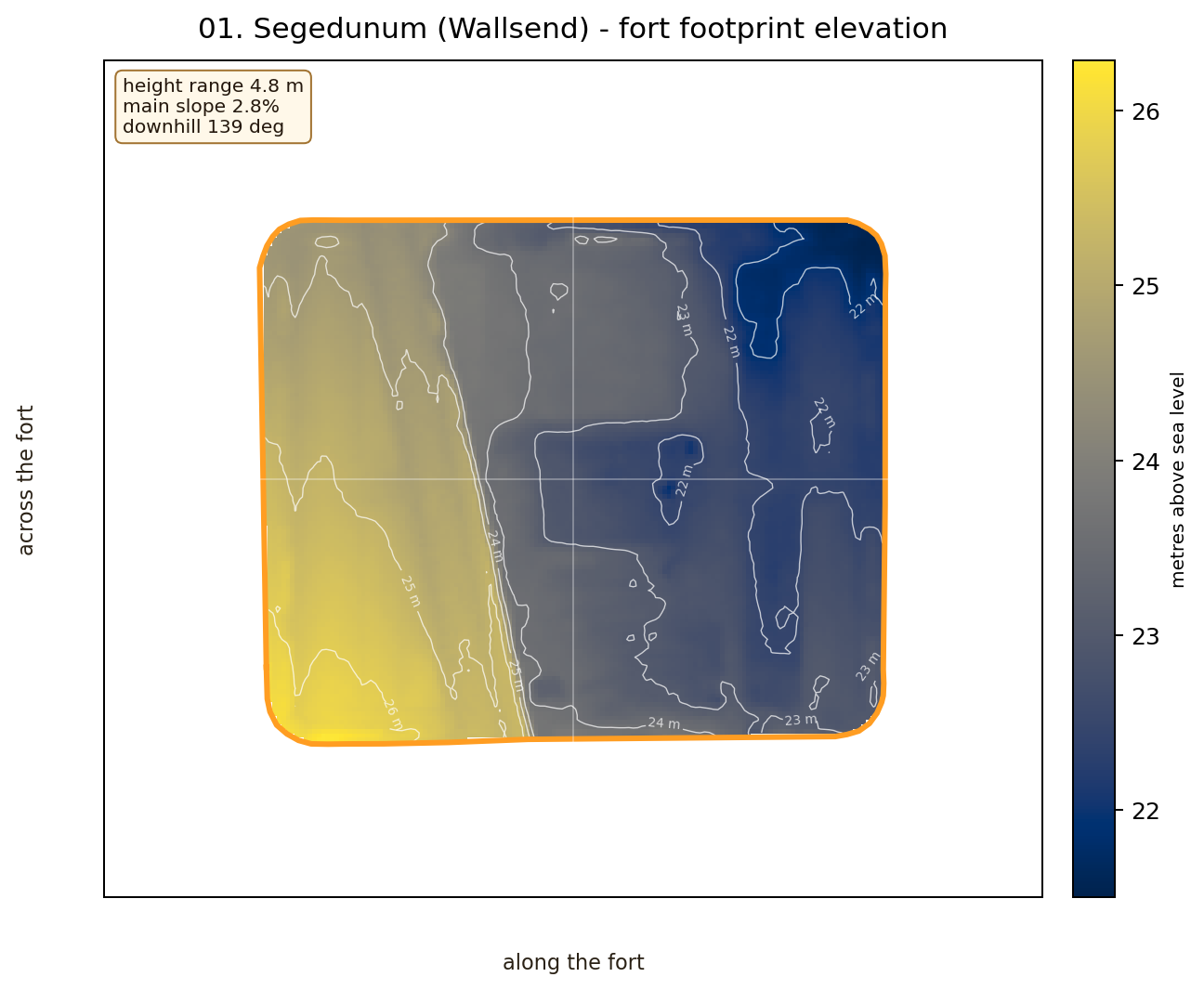
Each card links to the elevation map, humps-and-hollows map and cross-section profile.

01. Segedunum Wallsend

gentler working platform

Challenge: Why might an engineer like this quieter piece of ground?
Height range
4.785 m
Slope
2.797%
Downhill
SE
Segedunum elevation mapSegedunum humps and hollowsSegedunum cross sections

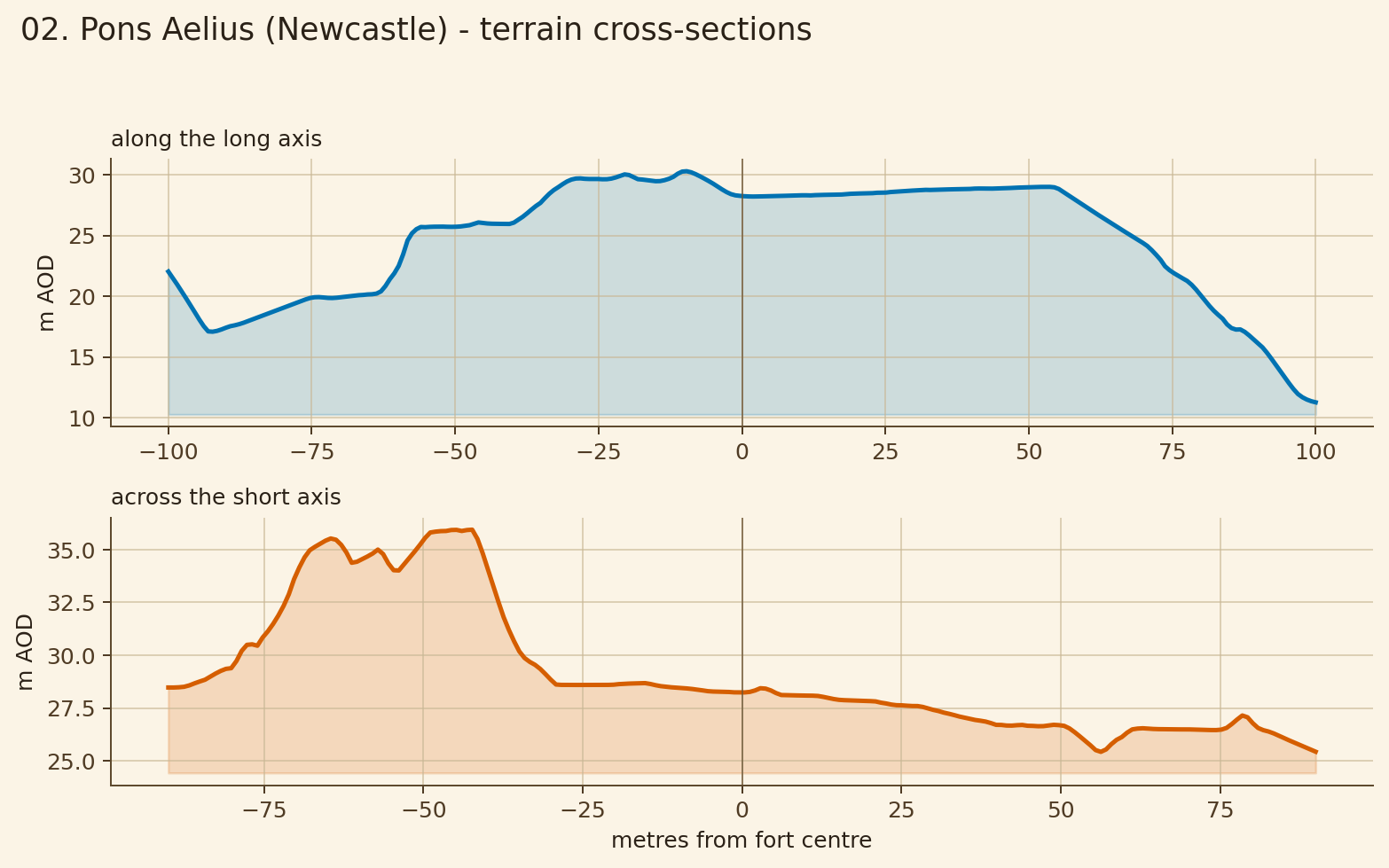
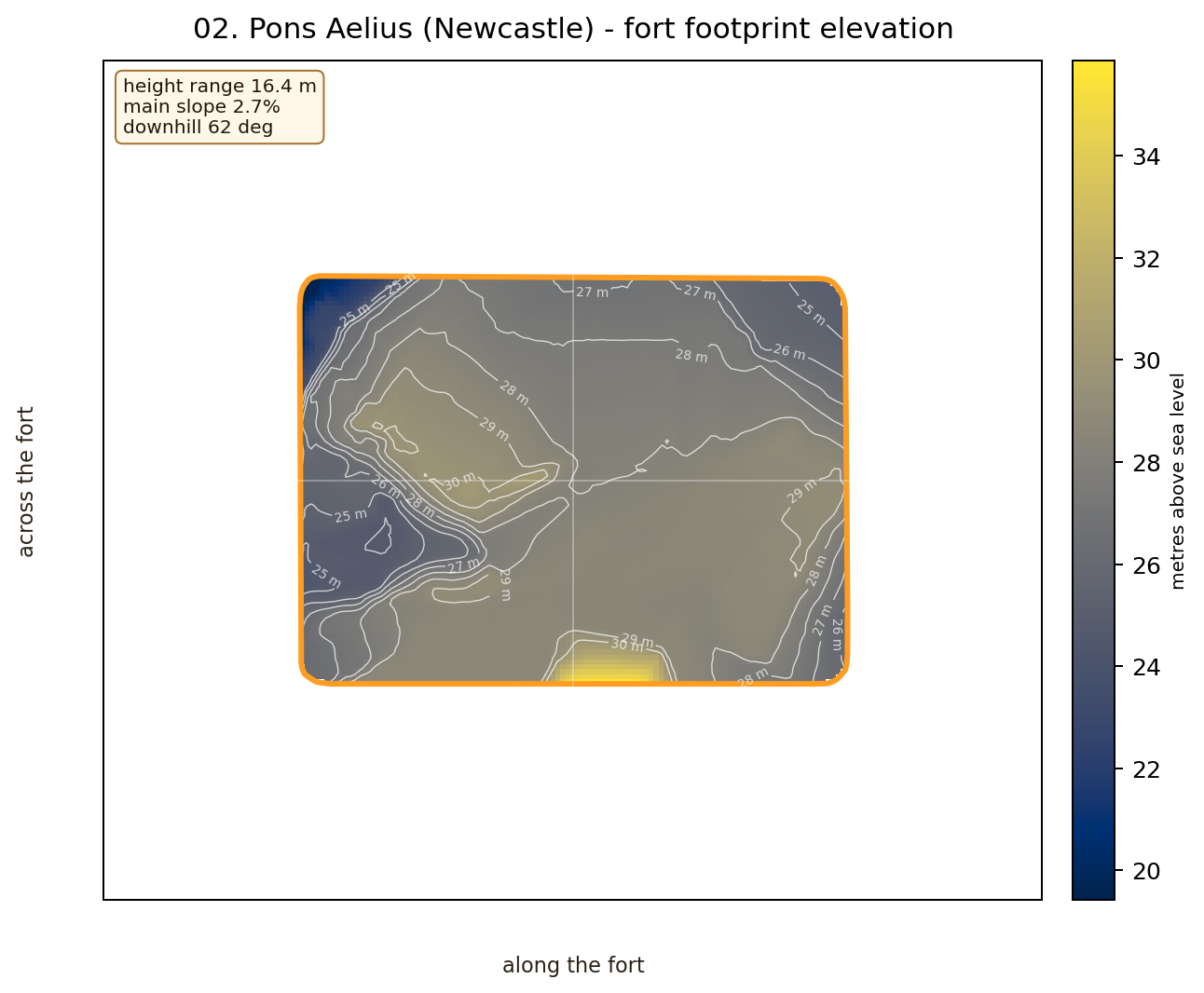
02. Pons Aelius Newcastle

humps-and-hollows detective case

Challenge: Which bumps might be older earthworks, later damage, or real Roman platforms?

Height range
16.441 m
Slope
2.745%
Downhill
ENE
Pons Aelius elevation mapPons Aelius humps and hollowsPons Aelius cross sections

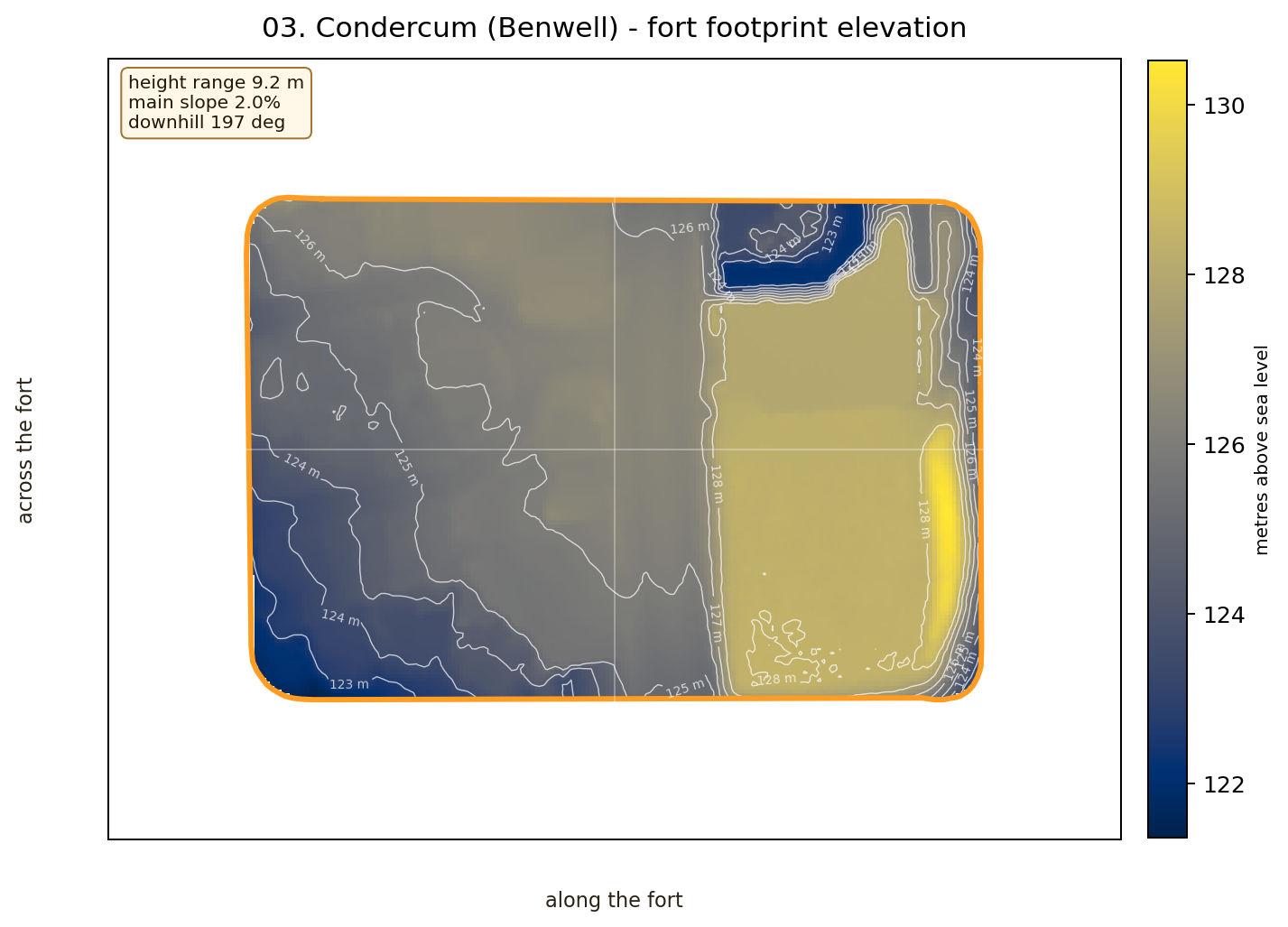
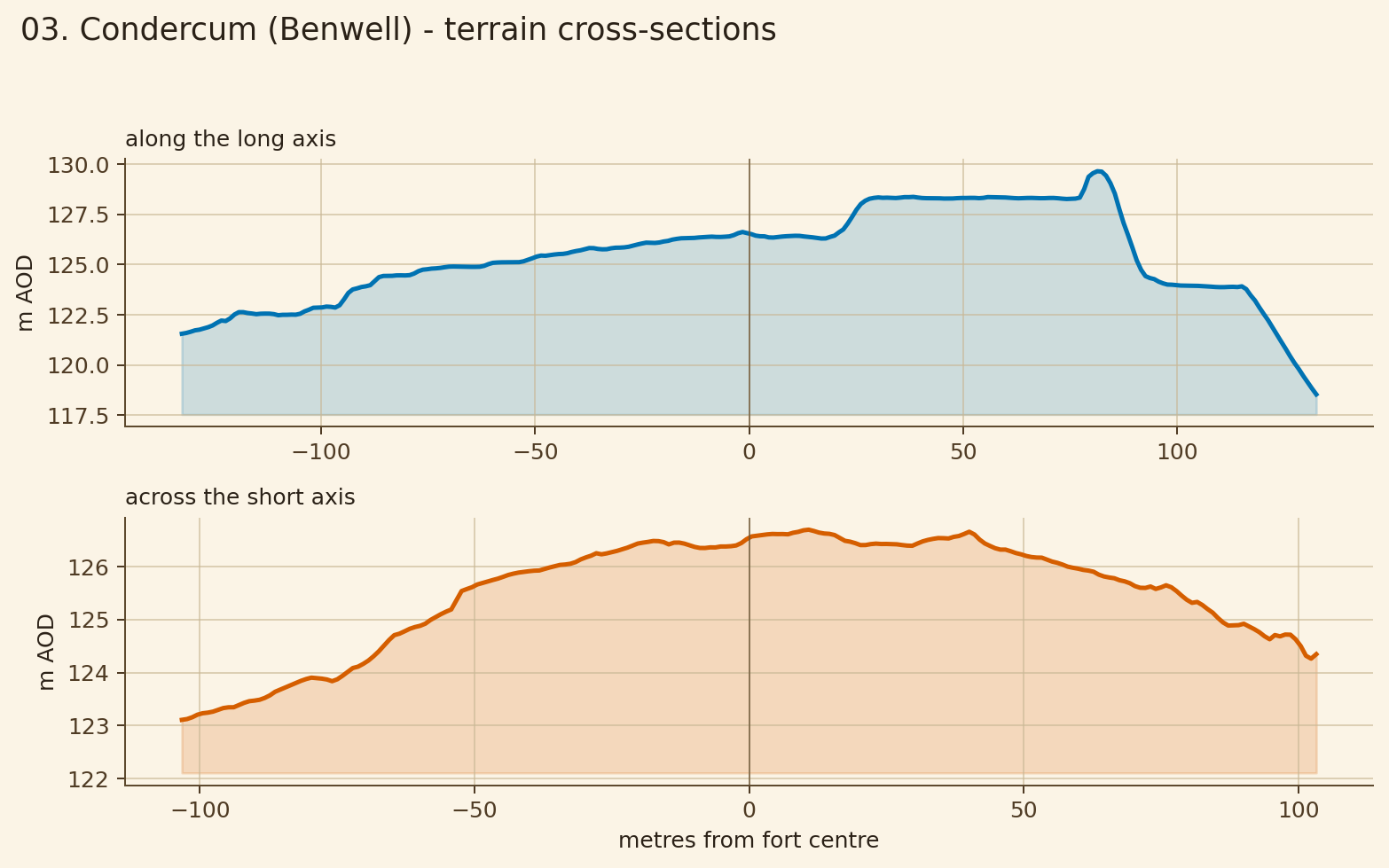
03. Condercum Benwell

humps-and-hollows detective case

Challenge: Which bumps might be older earthworks, later damage, or real Roman platforms?

Height range
9.159 m
Slope
2.029%
Downhill
SSW
Condercum elevation mapCondercum humps and hollowsCondercum cross sections

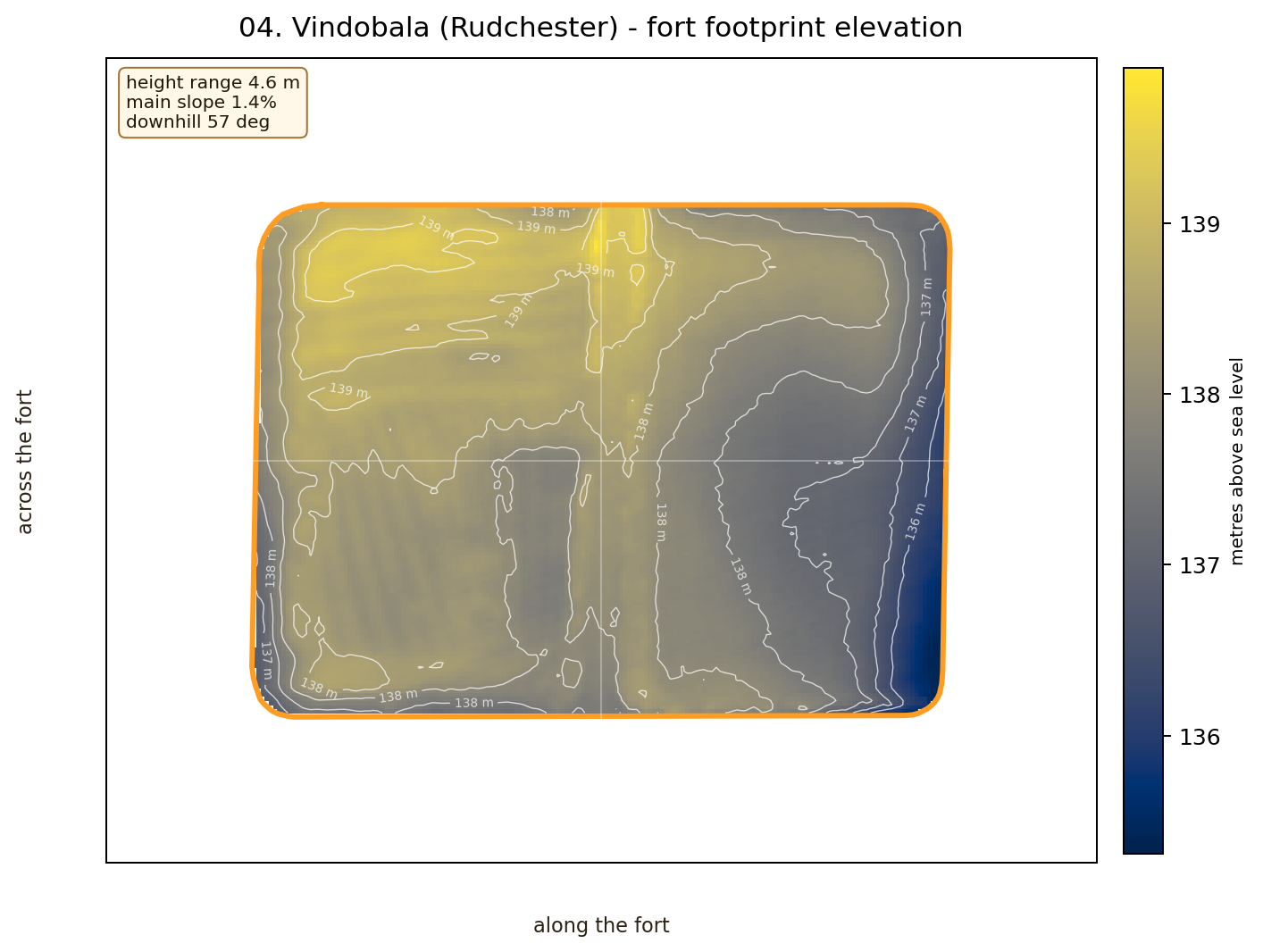
04. Vindobala Rudchester

gentler working platform

Challenge: Why might an engineer like this quieter piece of ground?
Height range
4.595 m
Slope
1.407%
Downhill
ENE
Vindobala elevation mapVindobala humps and hollowsVindobala cross sections

05. Onnum Halton Chesters

gentler working platform

Challenge: Why might an engineer like this quieter piece of ground?
Height range
4.205 m
Slope
0.953%
Downhill
NE
Onnum elevation mapOnnum humps and hollowsOnnum cross sections

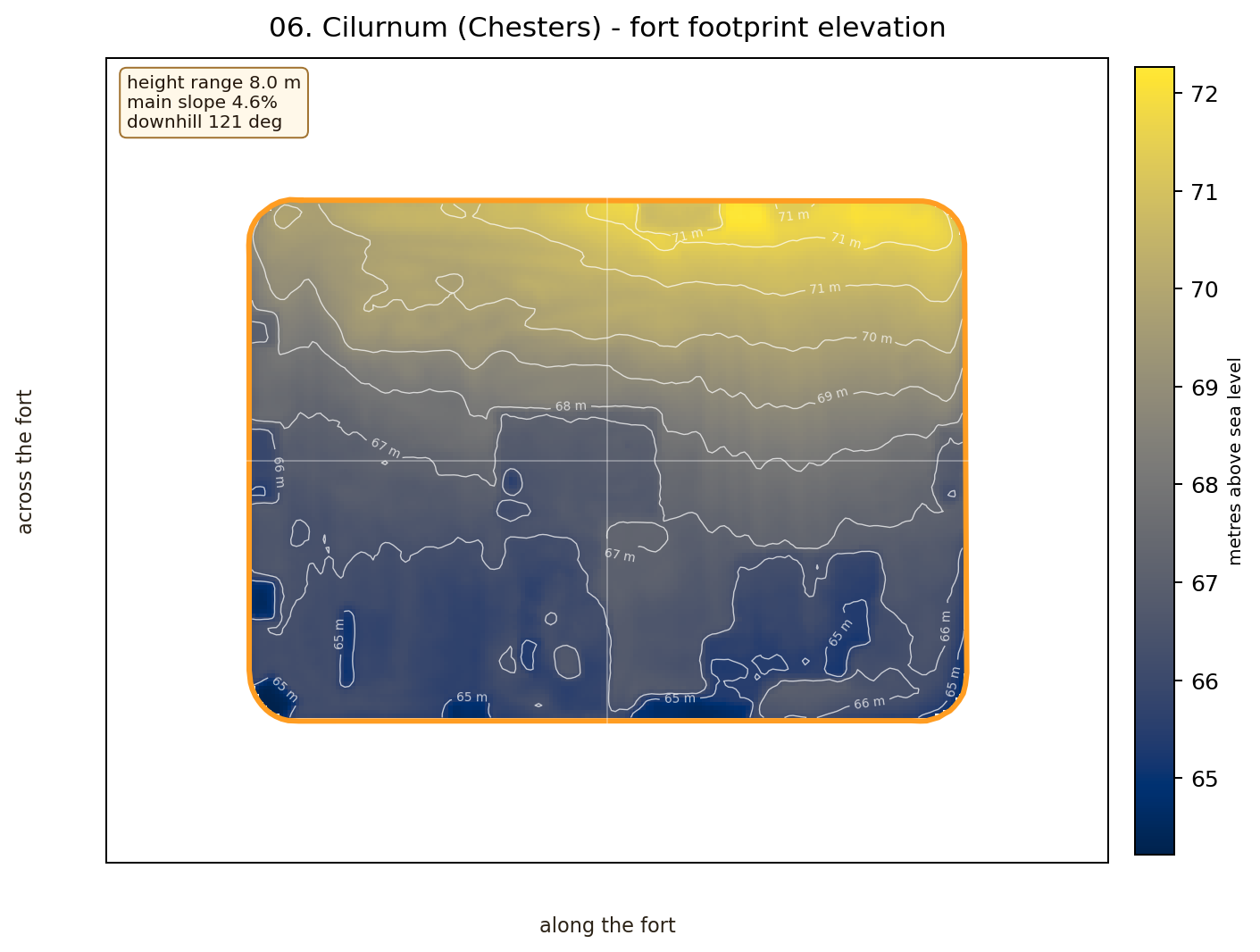
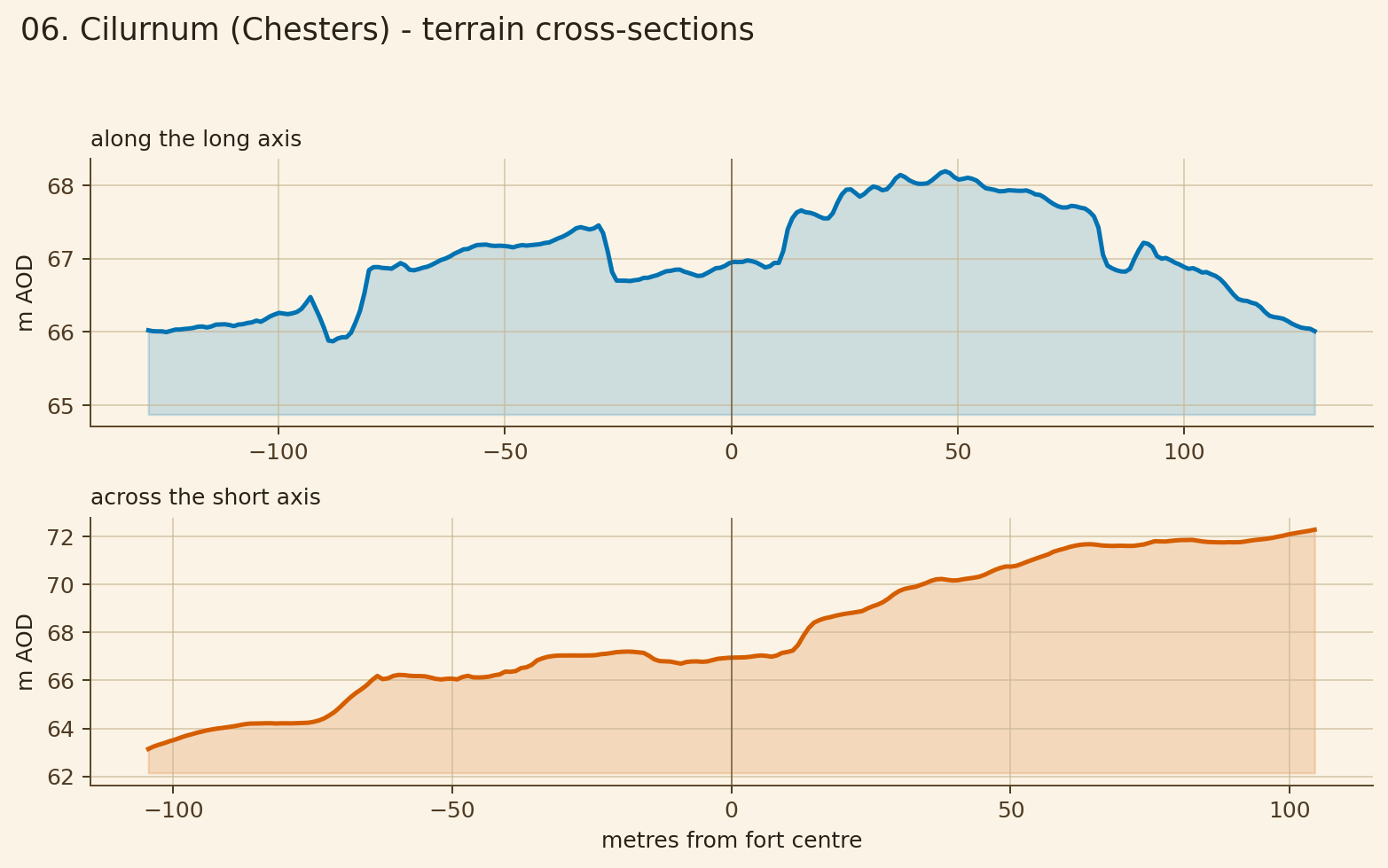
06. Cilurnum Chesters

tilted platform

Challenge: Which gate or street would need the cleverest drain?

Height range
8.048 m
Slope
4.643%
Downhill
ESE
Cilurnum elevation mapCilurnum humps and hollowsCilurnum cross sections

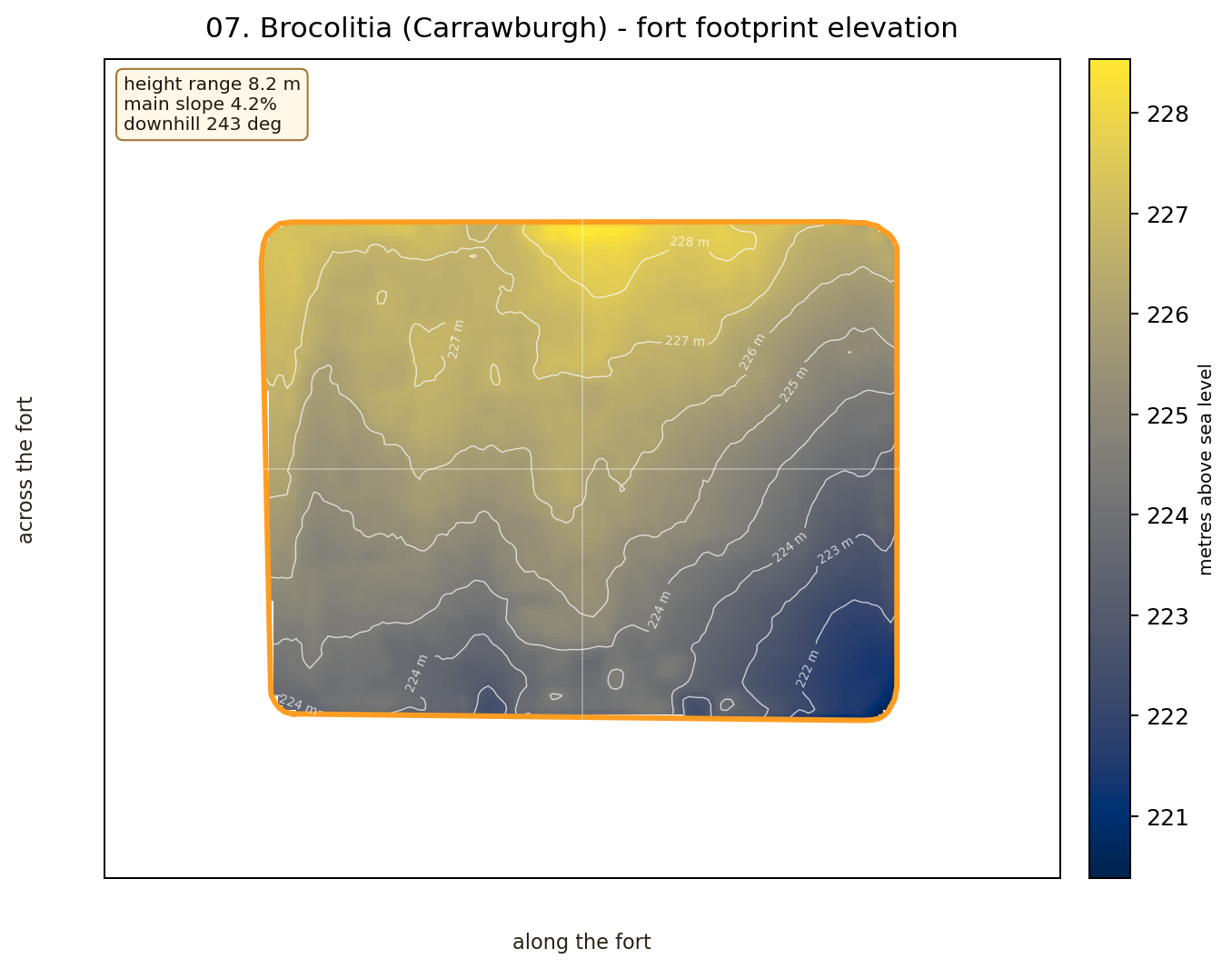
07. Brocolitia Carrawburgh

tilted platform

Challenge: Which gate or street would need the cleverest drain?

Height range
8.151 m
Slope
4.191%
Downhill
WSW
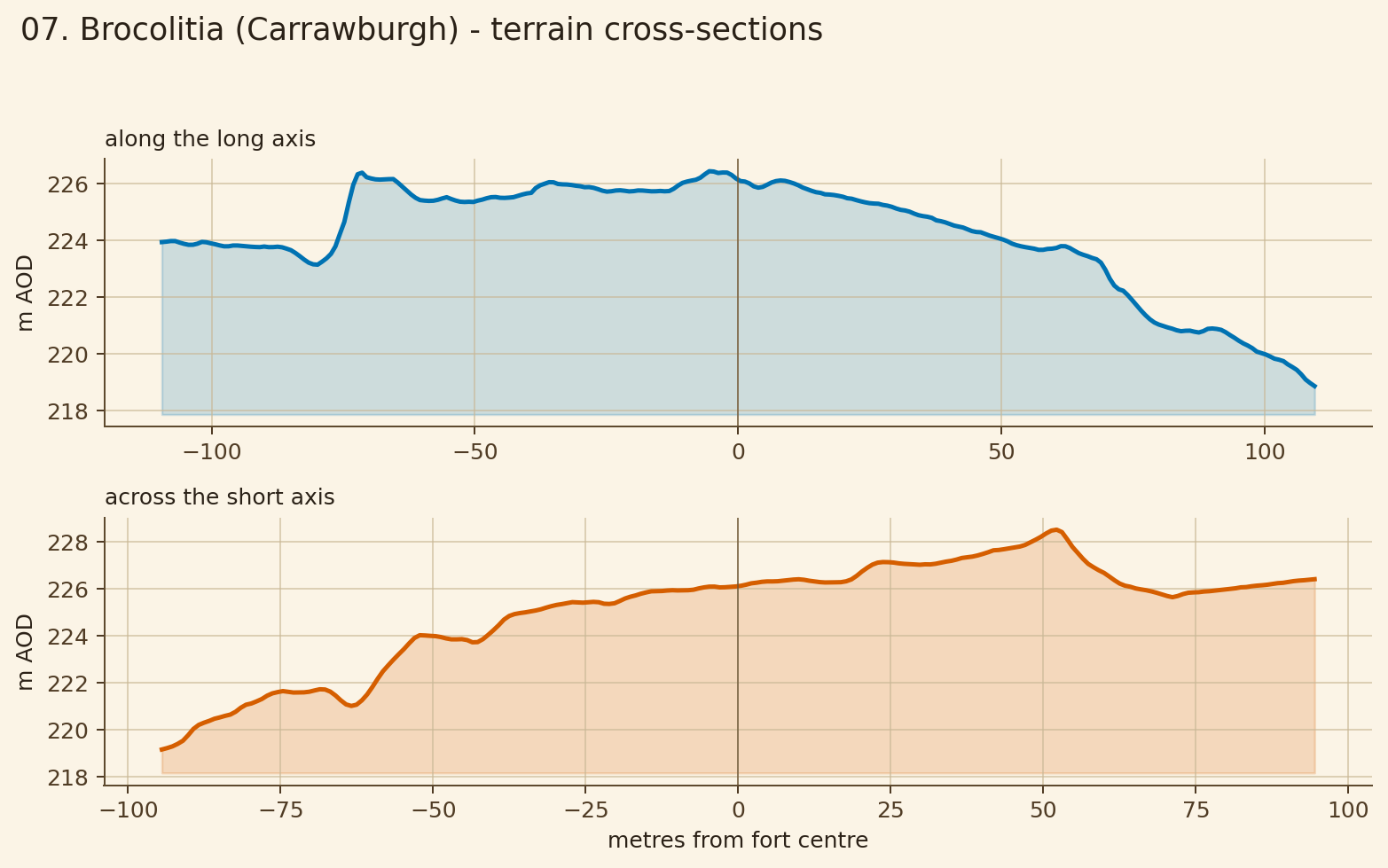
Brocolitia elevation mapBrocolitia humps and hollowsBrocolitia cross sections

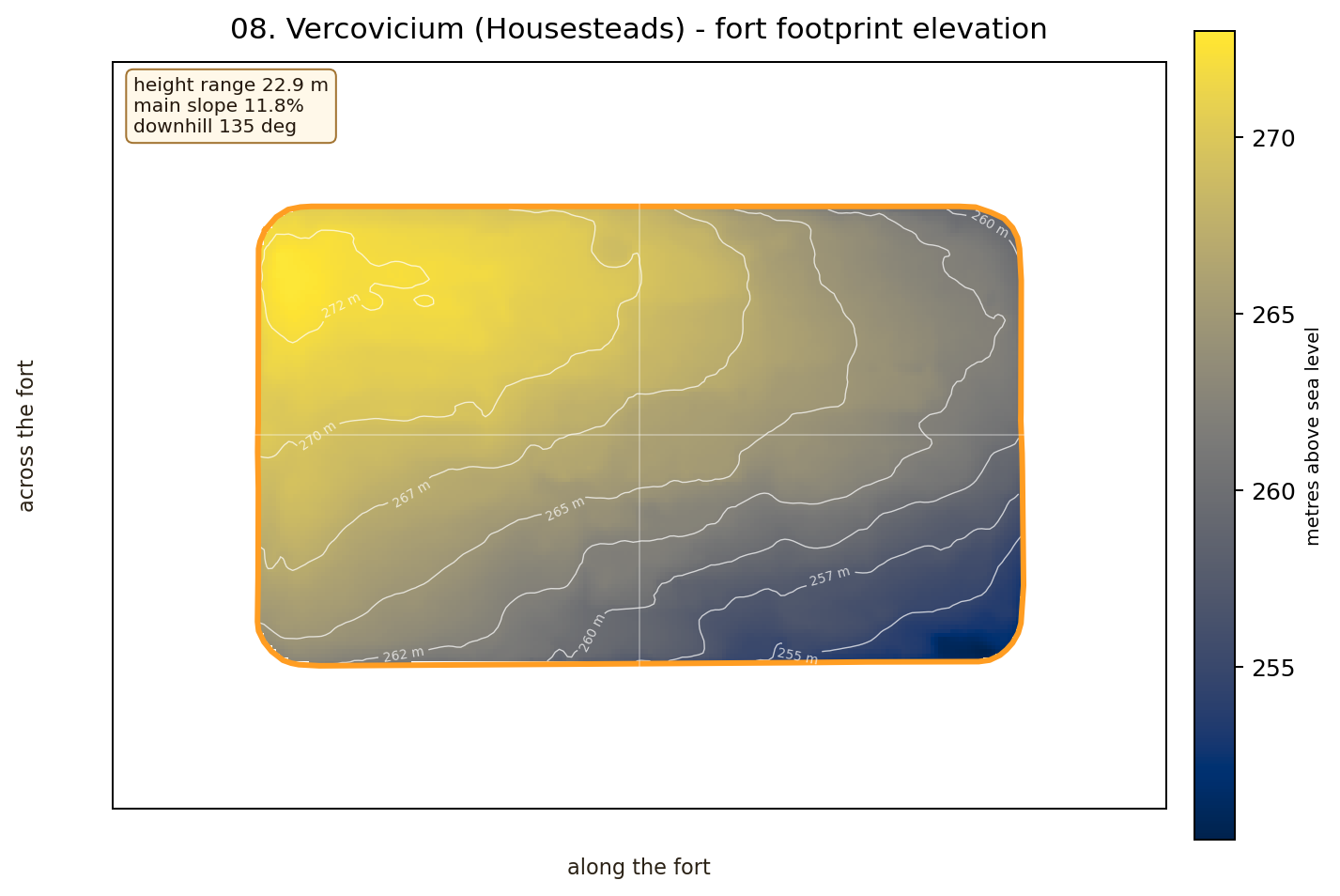
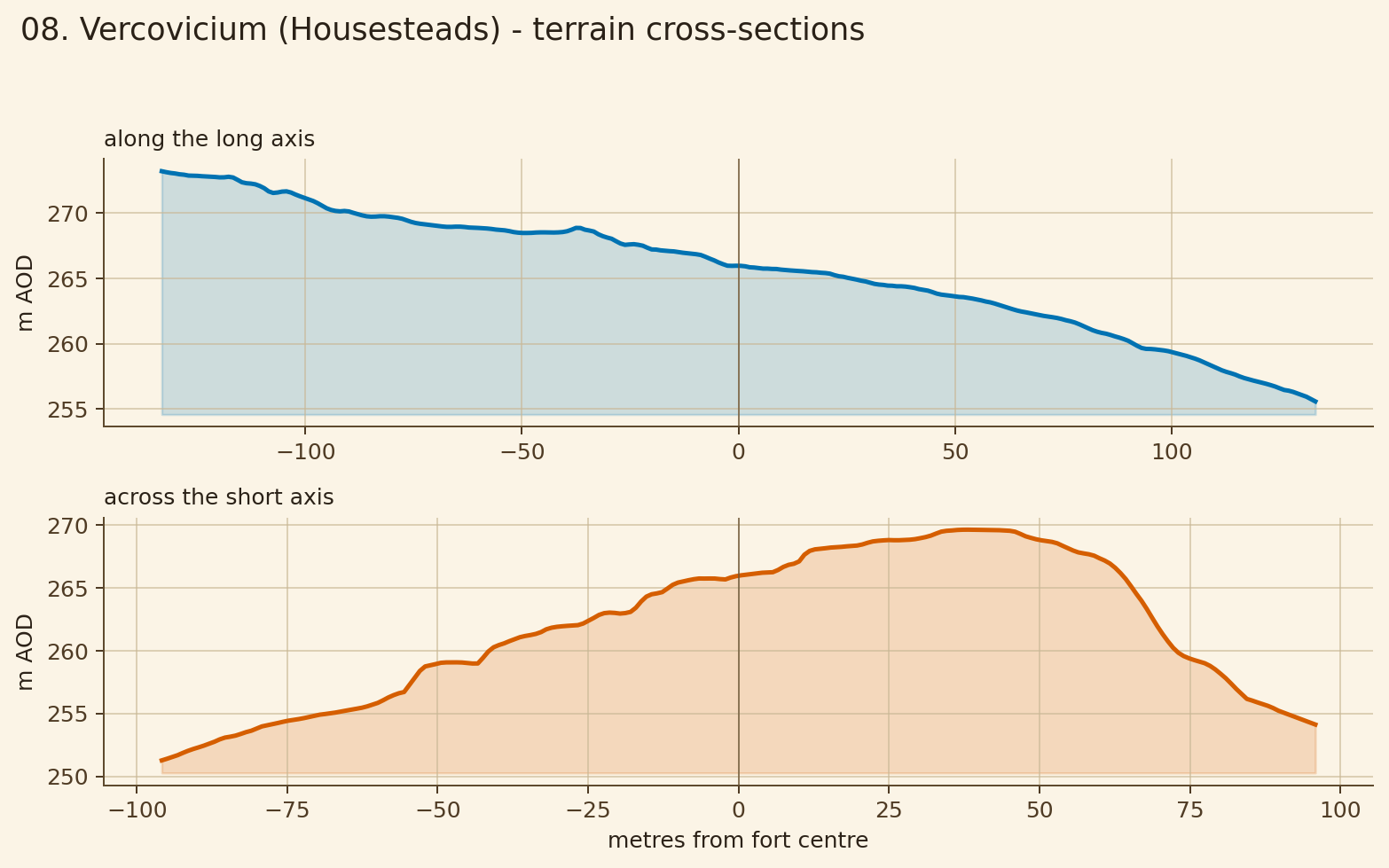
08. Vercovicium Housesteads

steep hillside fort

Challenge: How would you stop rainwater running straight through the streets?

Height range
22.891 m
Slope
11.816%
Downhill
SE
Vercovicium elevation mapVercovicium humps and hollowsVercovicium cross sections

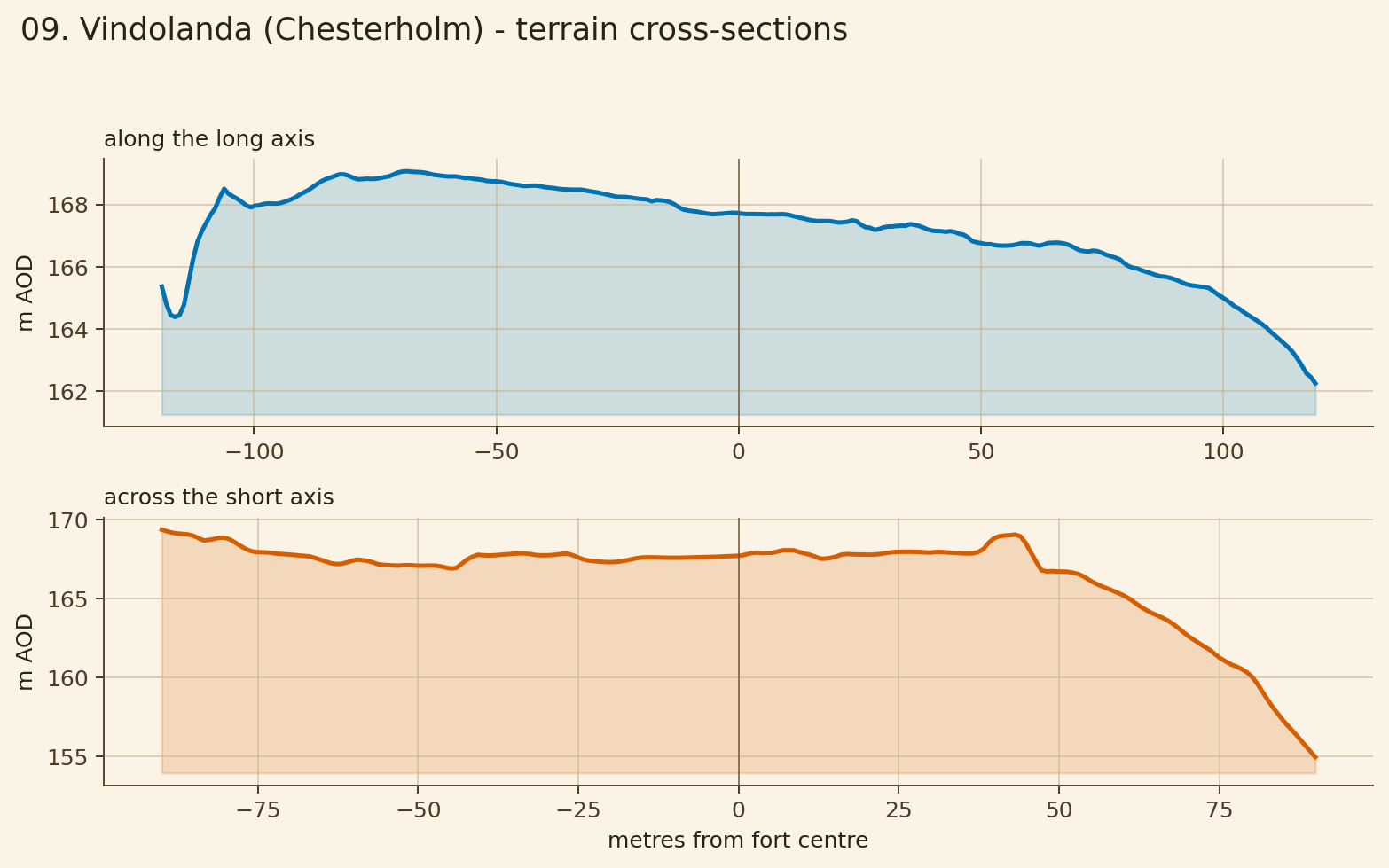
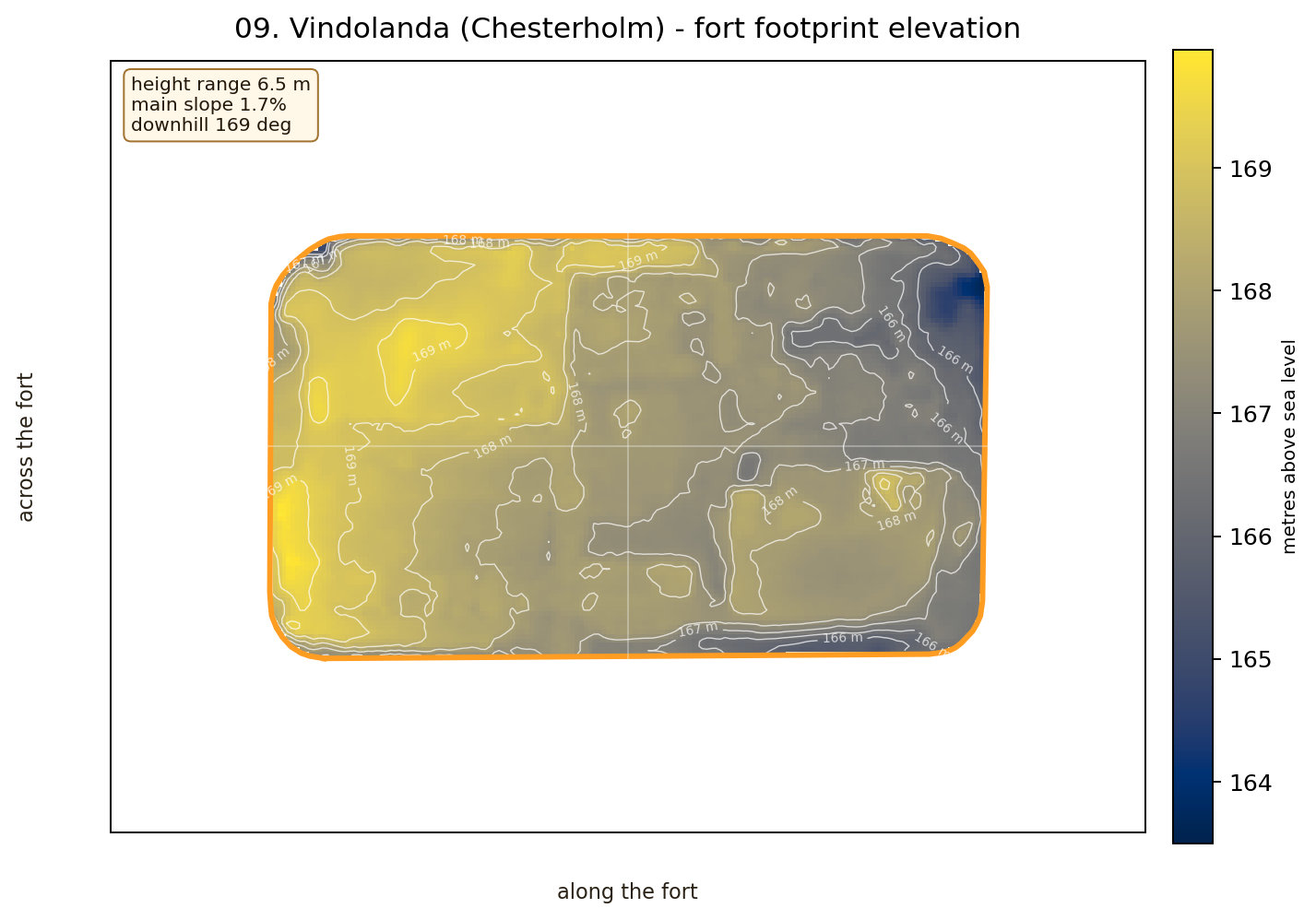
09. Vindolanda Chesterholm

gentler working platform

Challenge: Why might an engineer like this quieter piece of ground?

Height range
6.462 m
Slope
1.697%
Downhill
SSE
Vindolanda elevation mapVindolanda humps and hollowsVindolanda cross sections

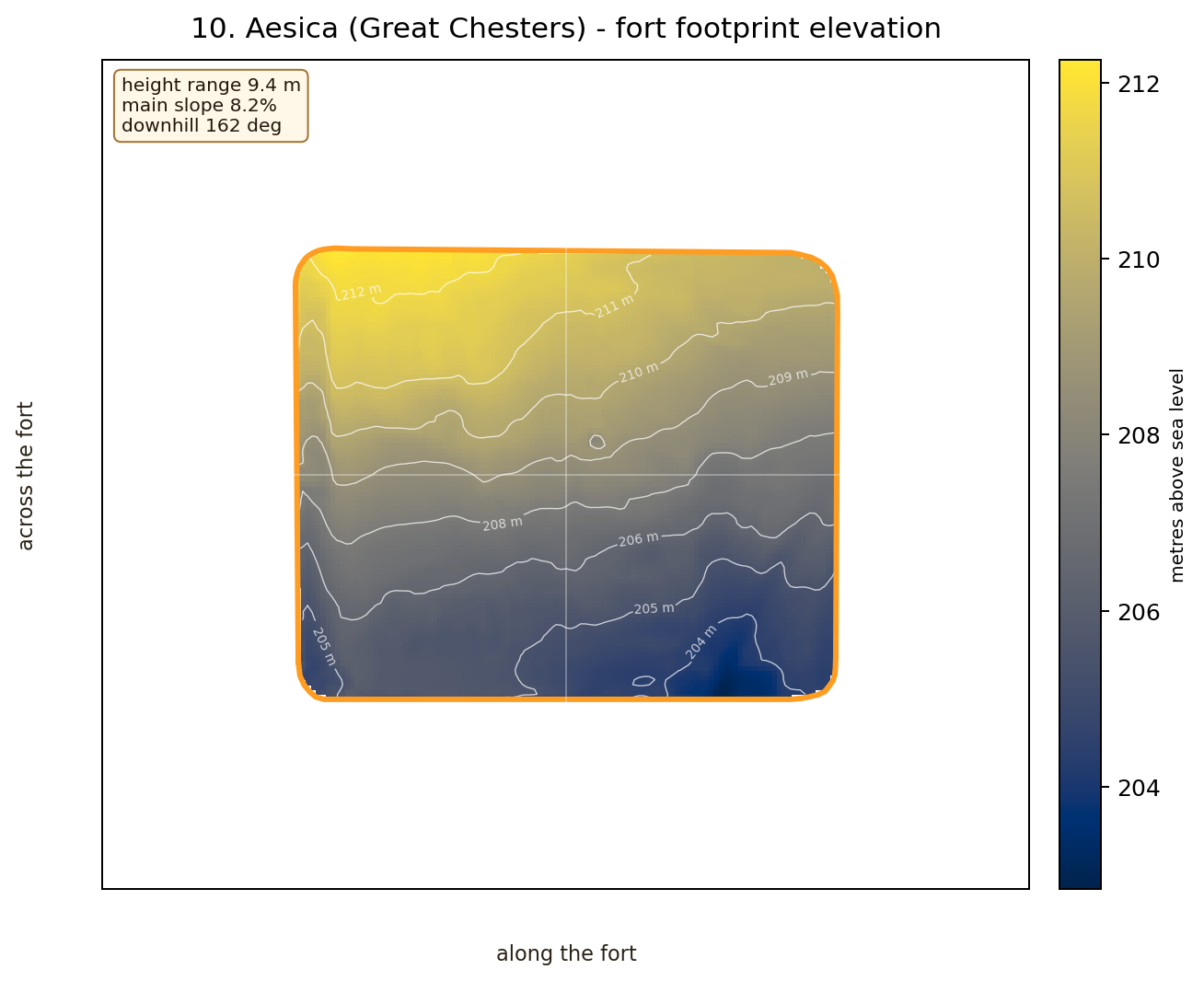
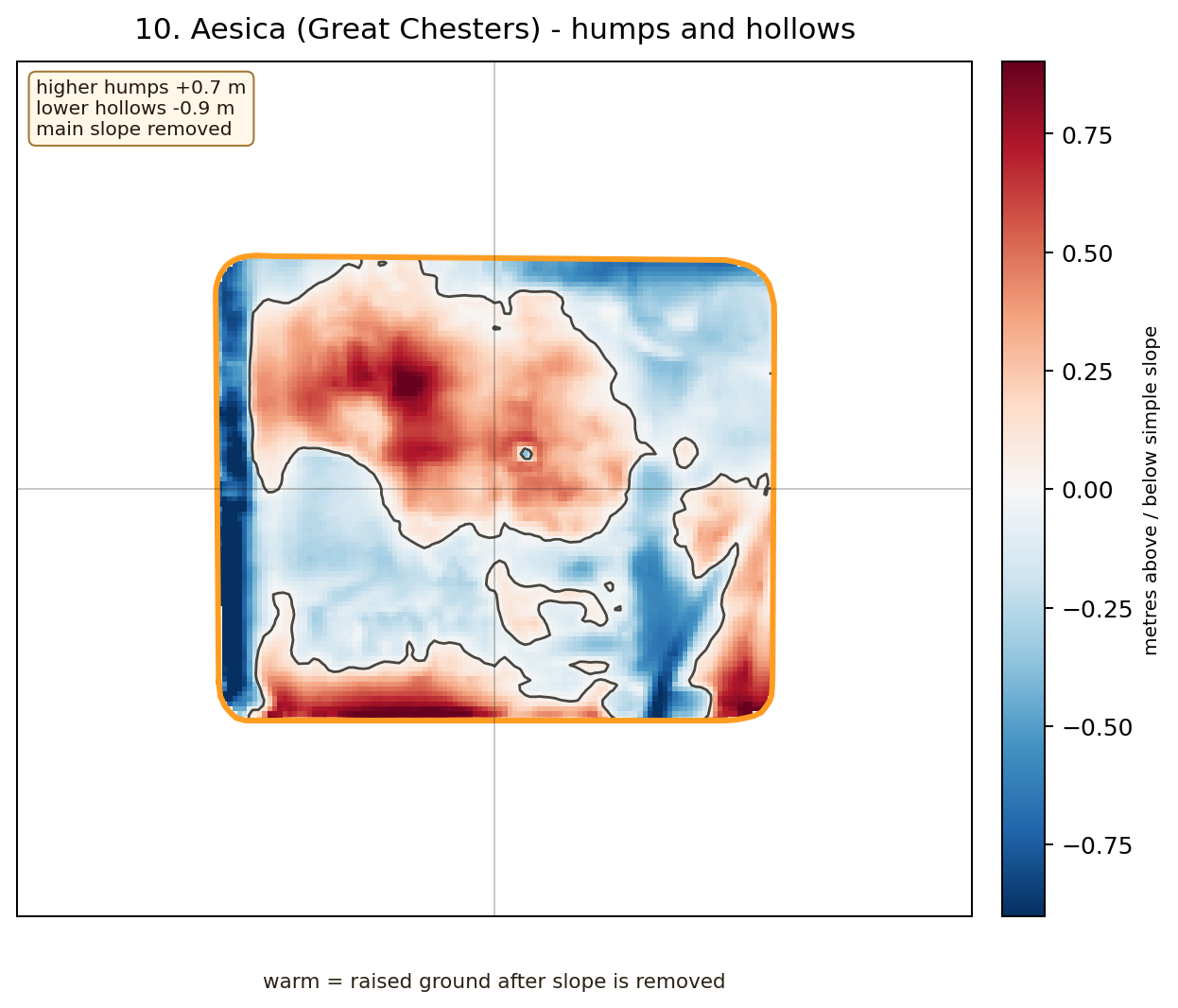
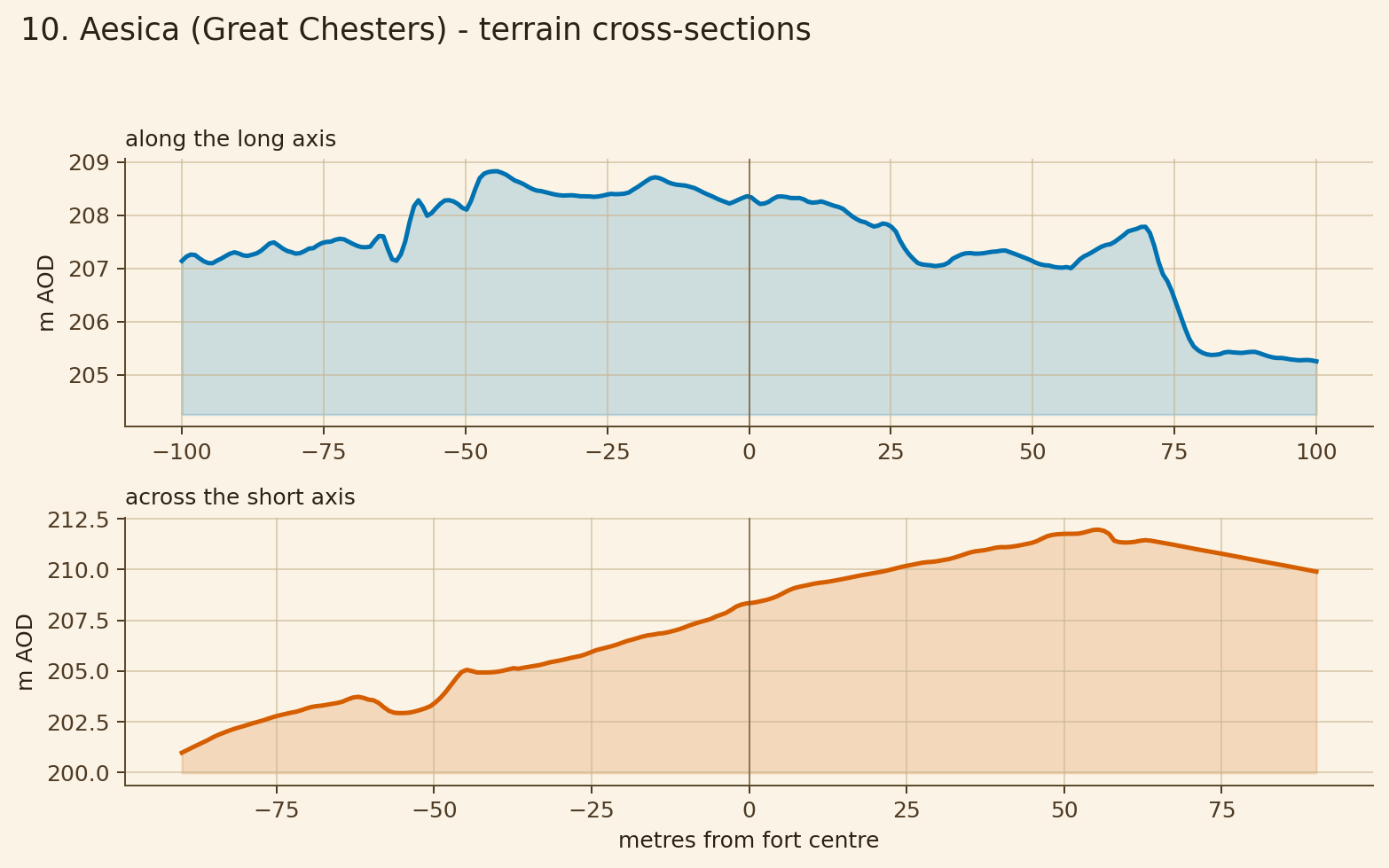
10. Aesica Great Chesters

steep hillside fort

Challenge: How would you stop rainwater running straight through the streets?

Height range
9.421 m
Slope
8.175%
Downhill
SSE
Aesica elevation mapAesica humps and hollowsAesica cross sections

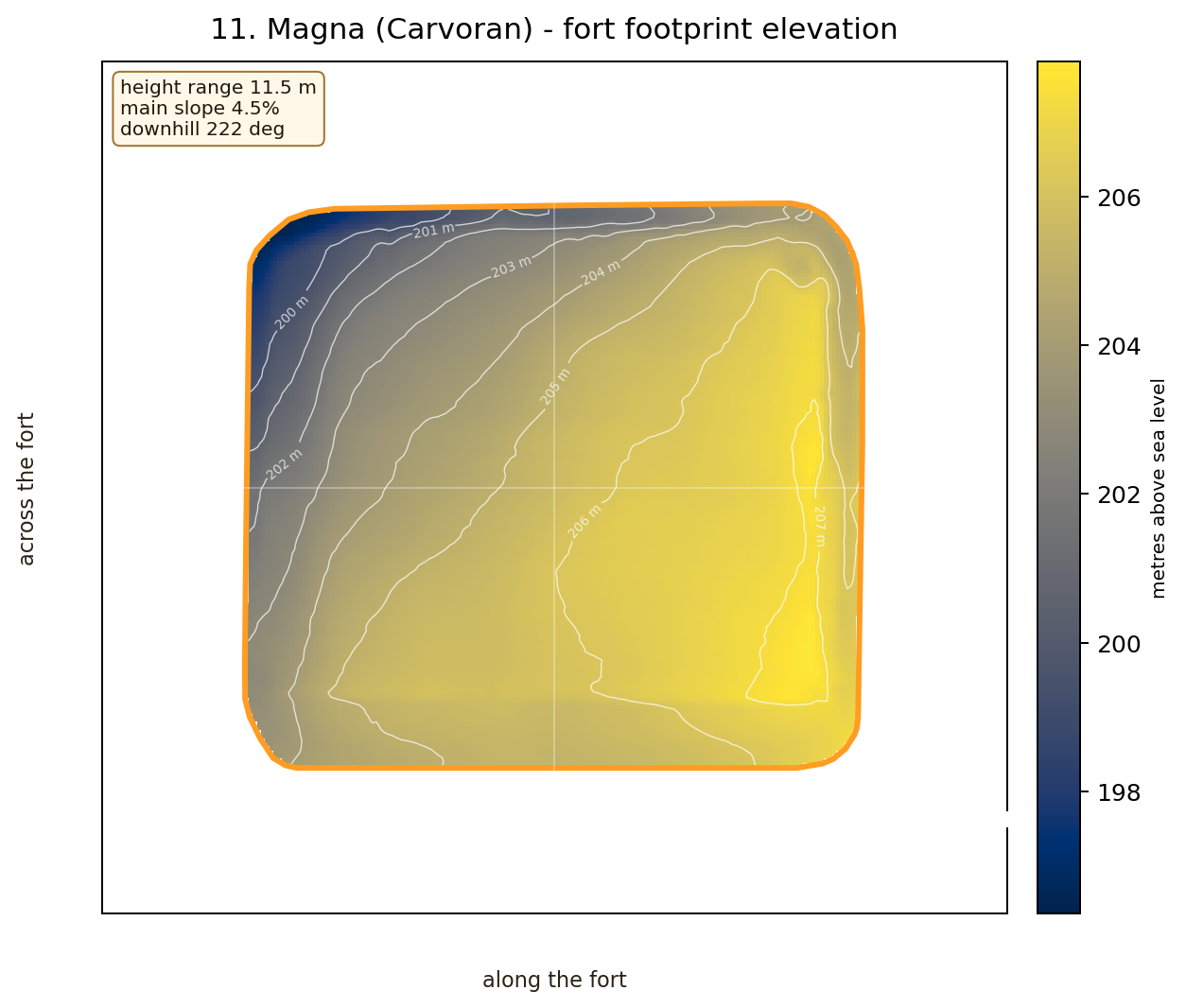
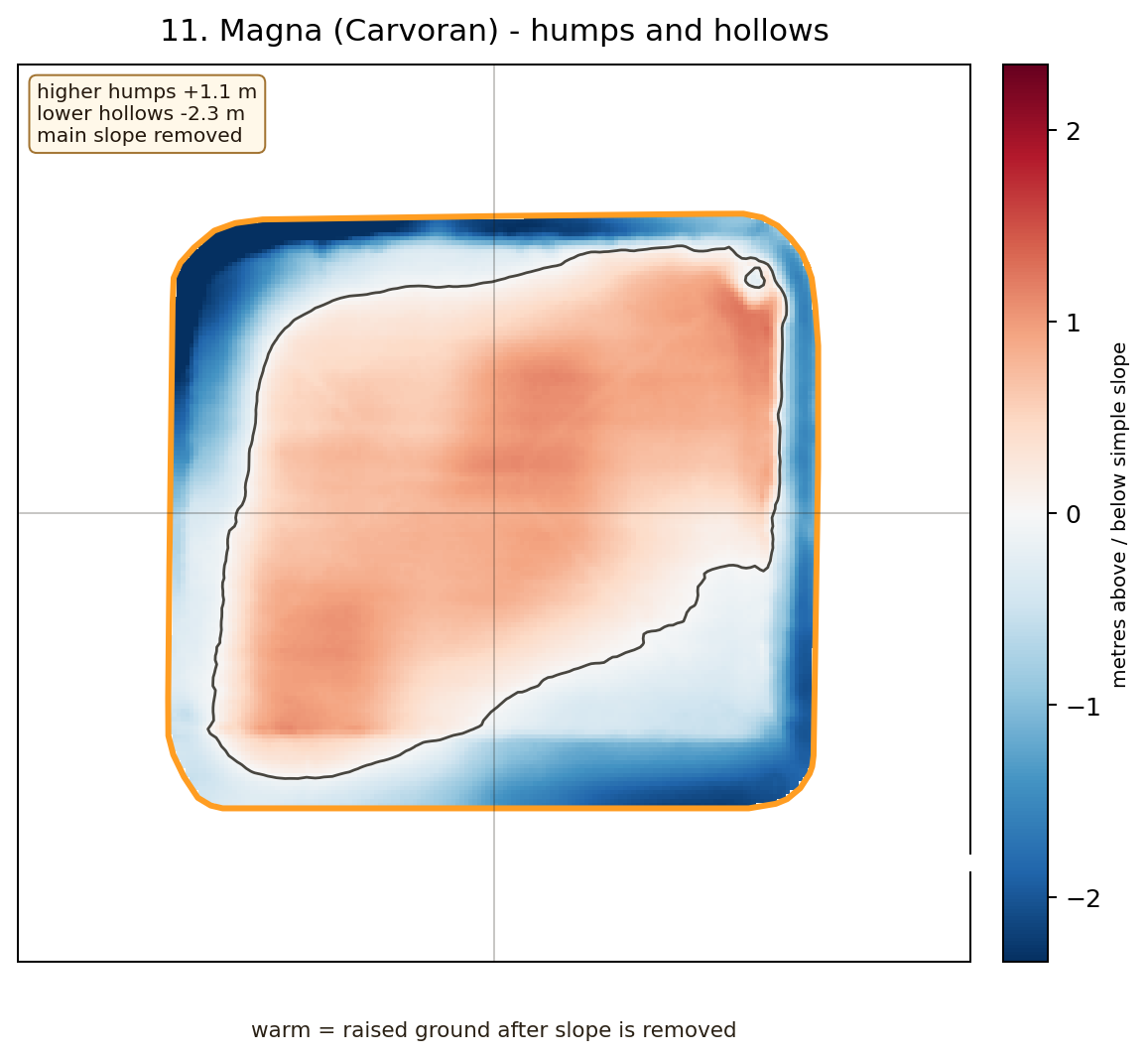
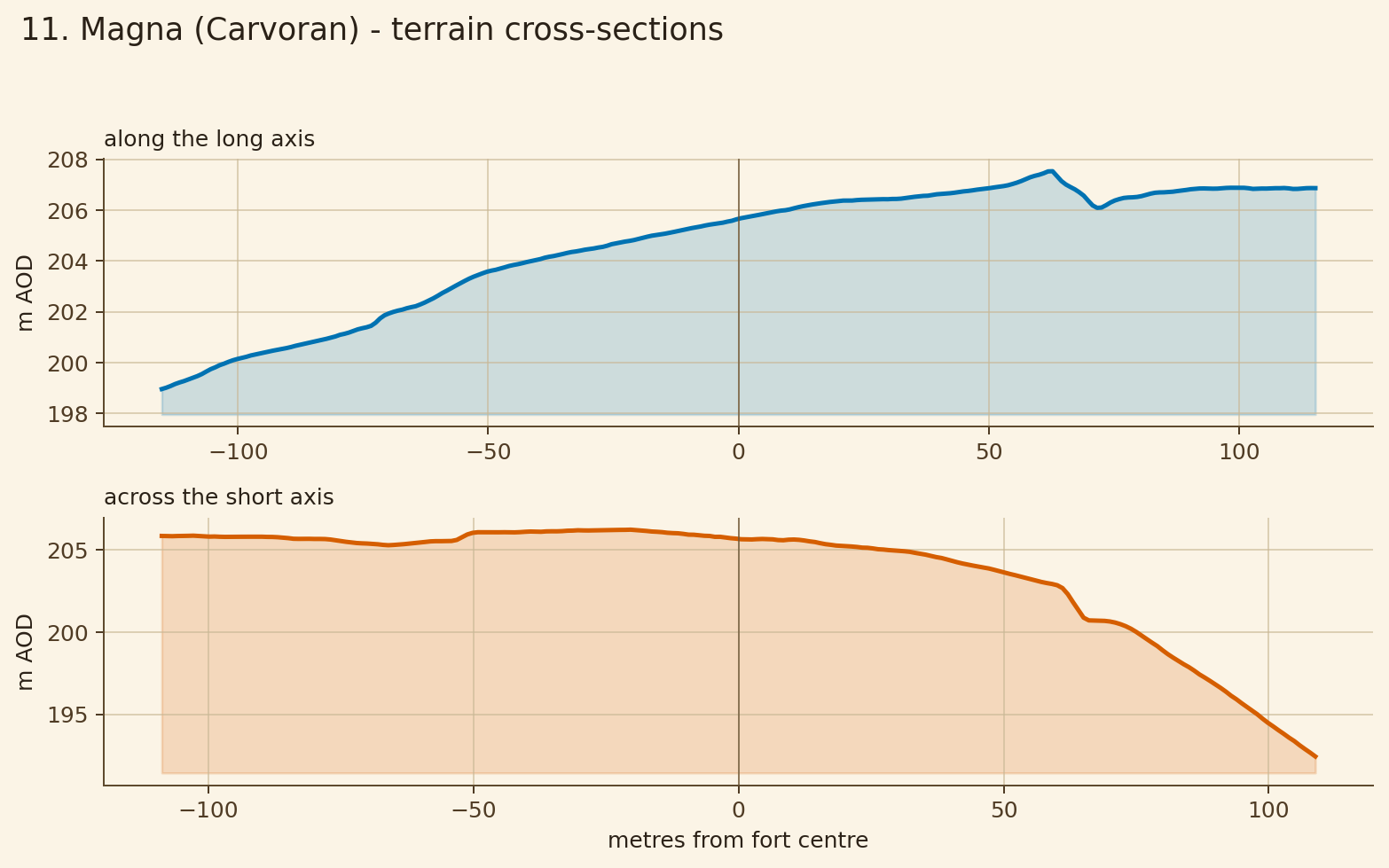
11. Magna Carvoran

tilted platform

Challenge: Which gate or street would need the cleverest drain?

Height range
11.455 m
Slope
4.502%
Downhill
SW
Magna elevation mapMagna humps and hollowsMagna cross sections

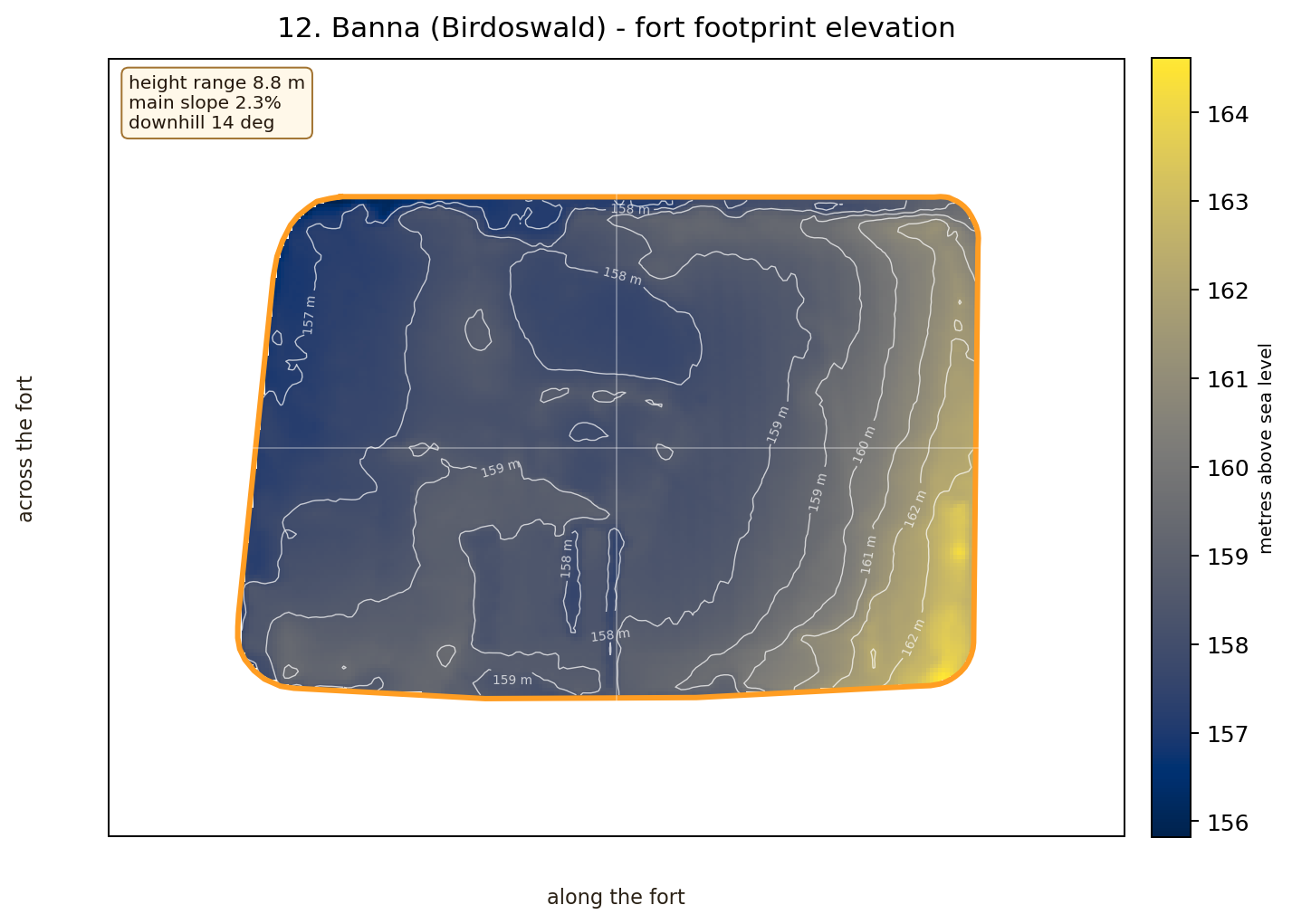
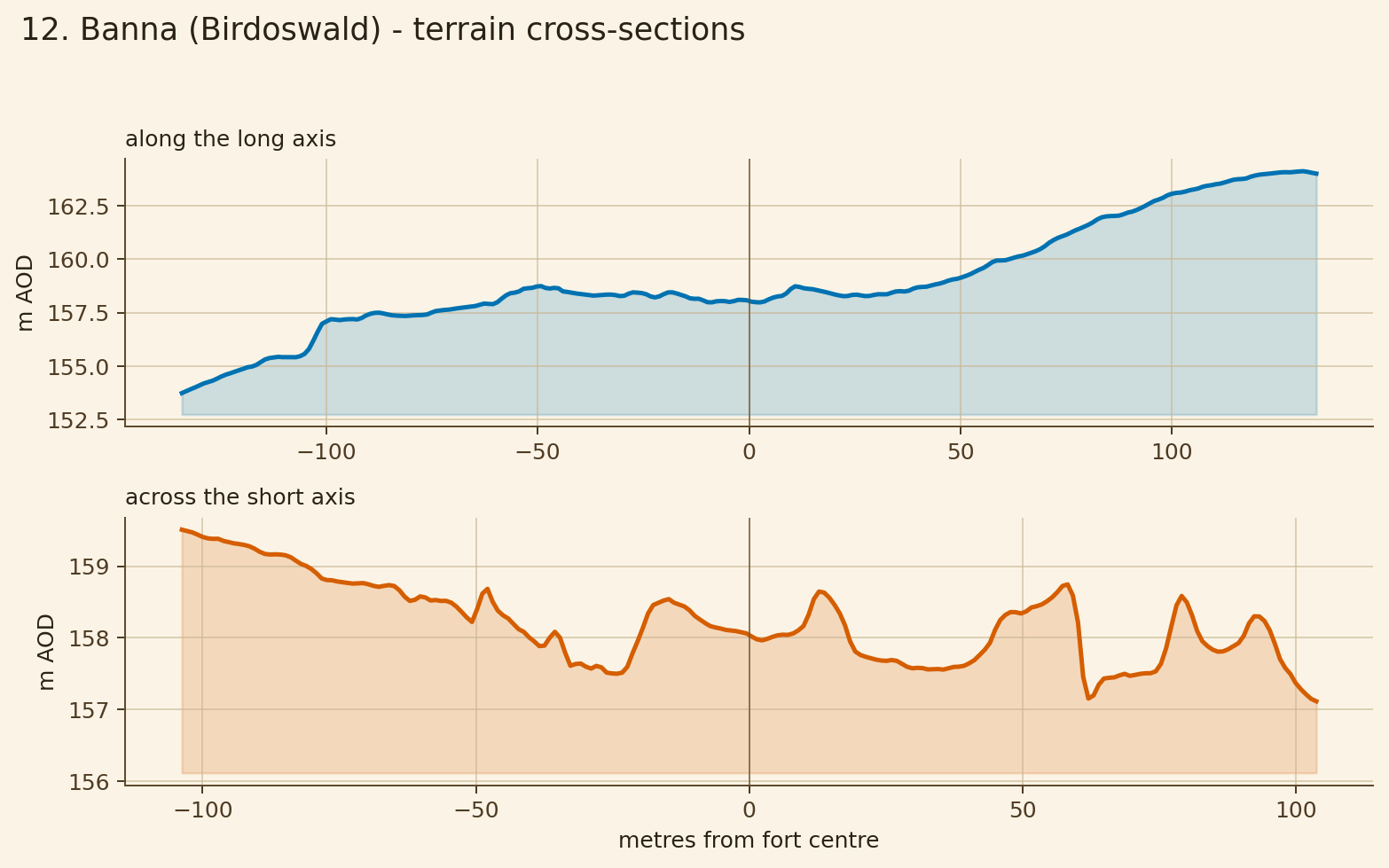
12. Banna Birdoswald

gentler working platform

Challenge: Why might an engineer like this quieter piece of ground?

Height range
8.79 m
Slope
2.32%
Downhill
NNE
Banna elevation mapBanna humps and hollowsBanna cross sections

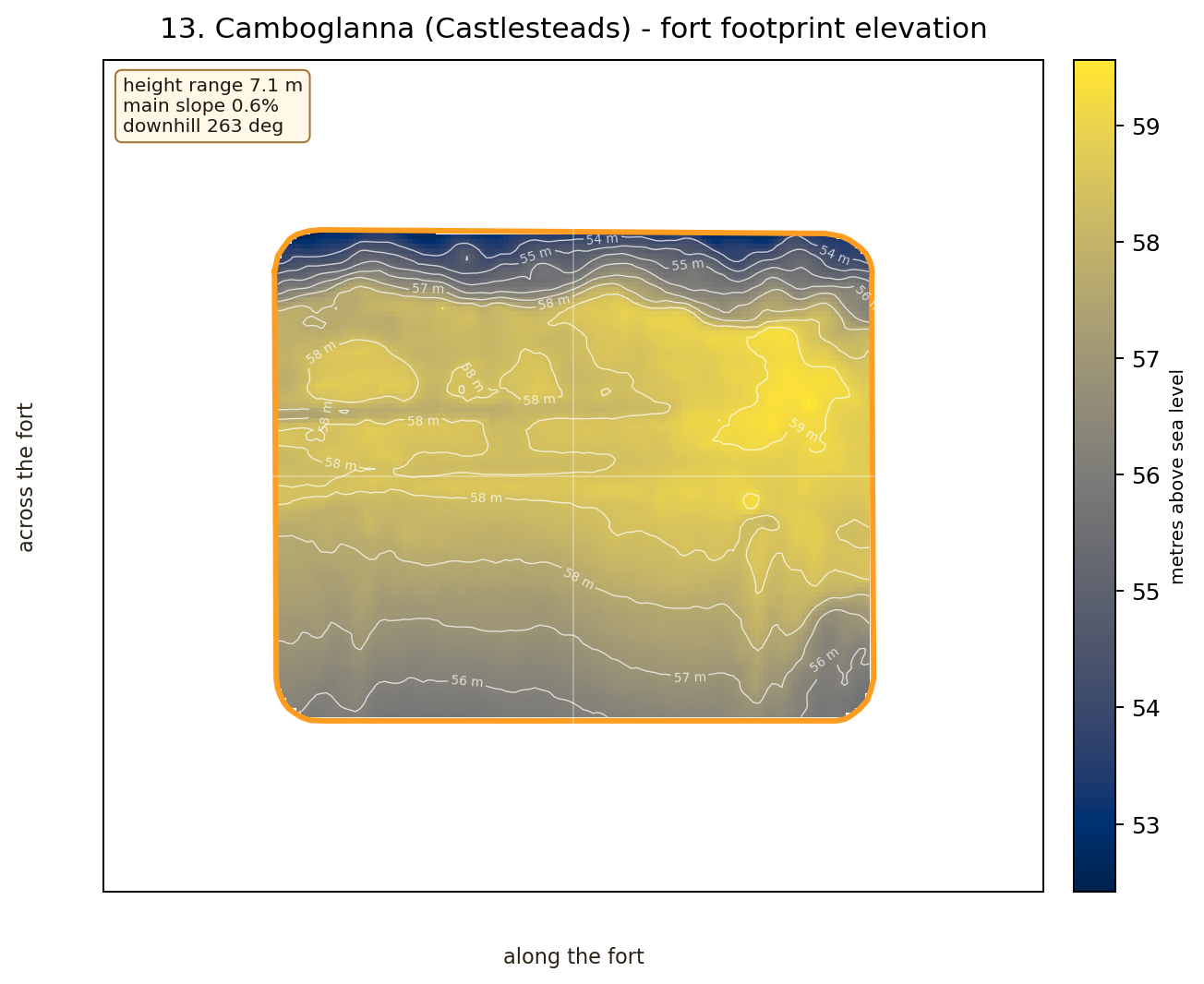
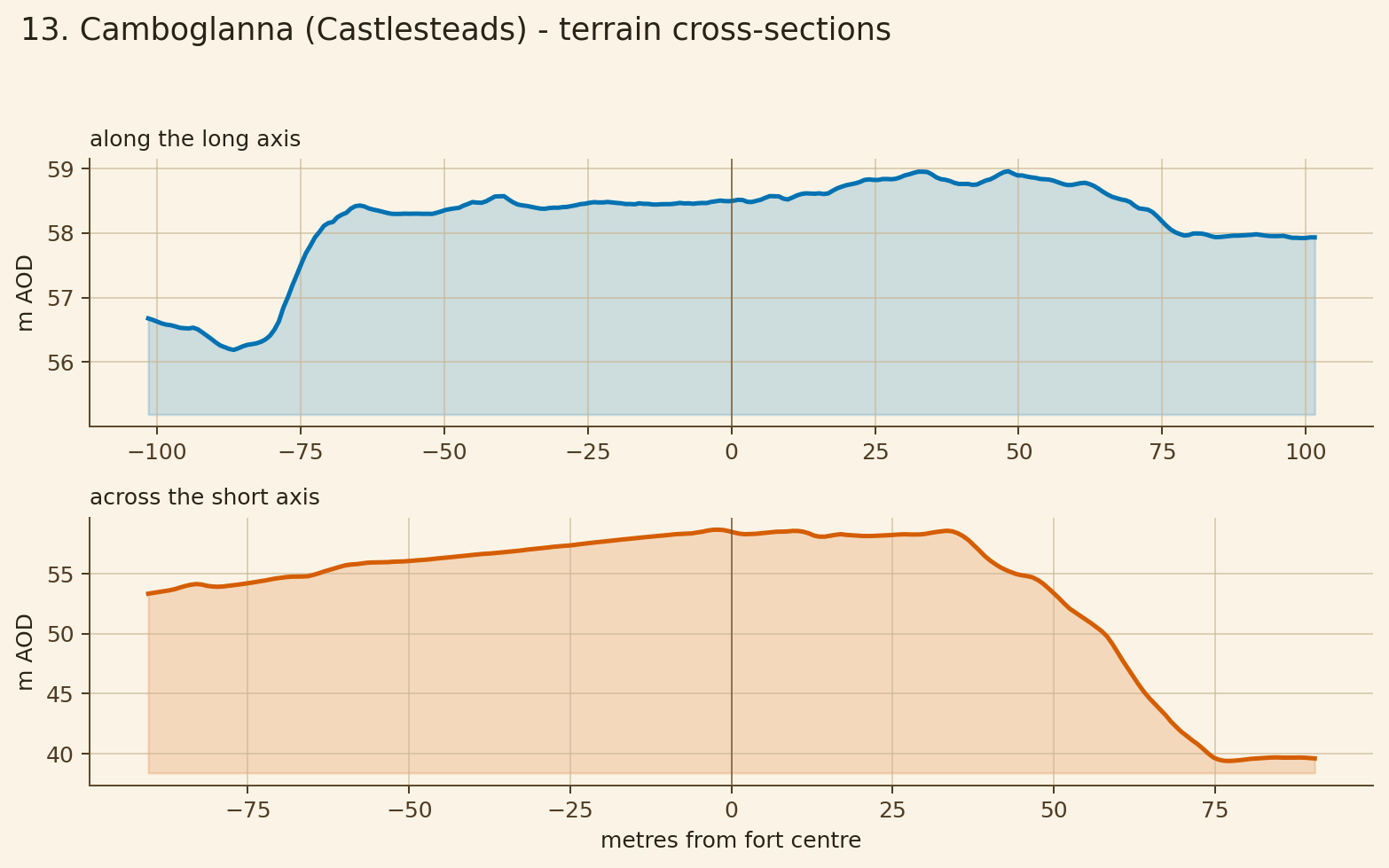
13. Camboglanna Castlesteads

gentler working platform

Challenge: Why might an engineer like this quieter piece of ground?

Height range
7.147 m
Slope
0.616%
Downhill
W
Camboglanna elevation mapCamboglanna humps and hollowsCamboglanna cross sections

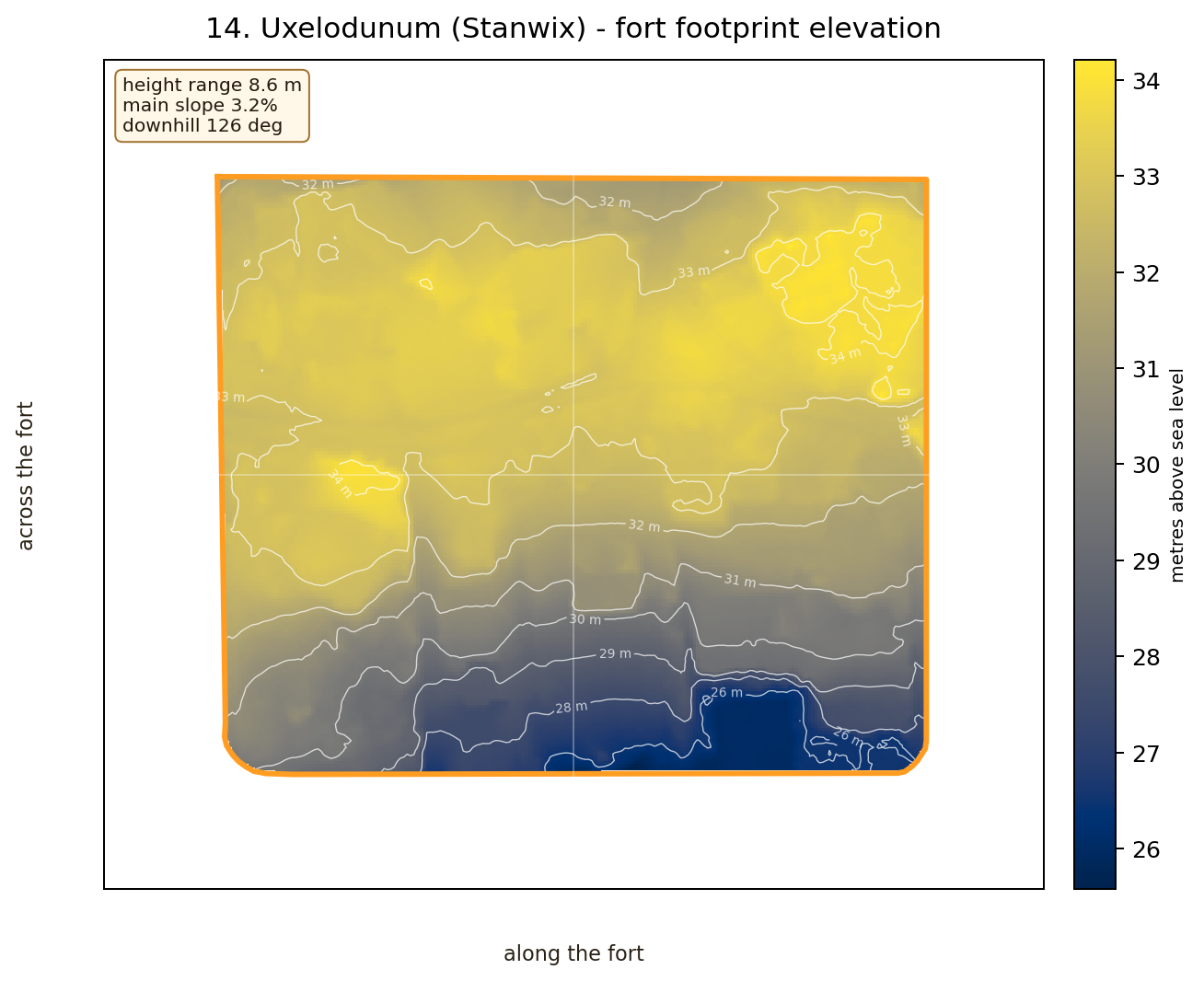
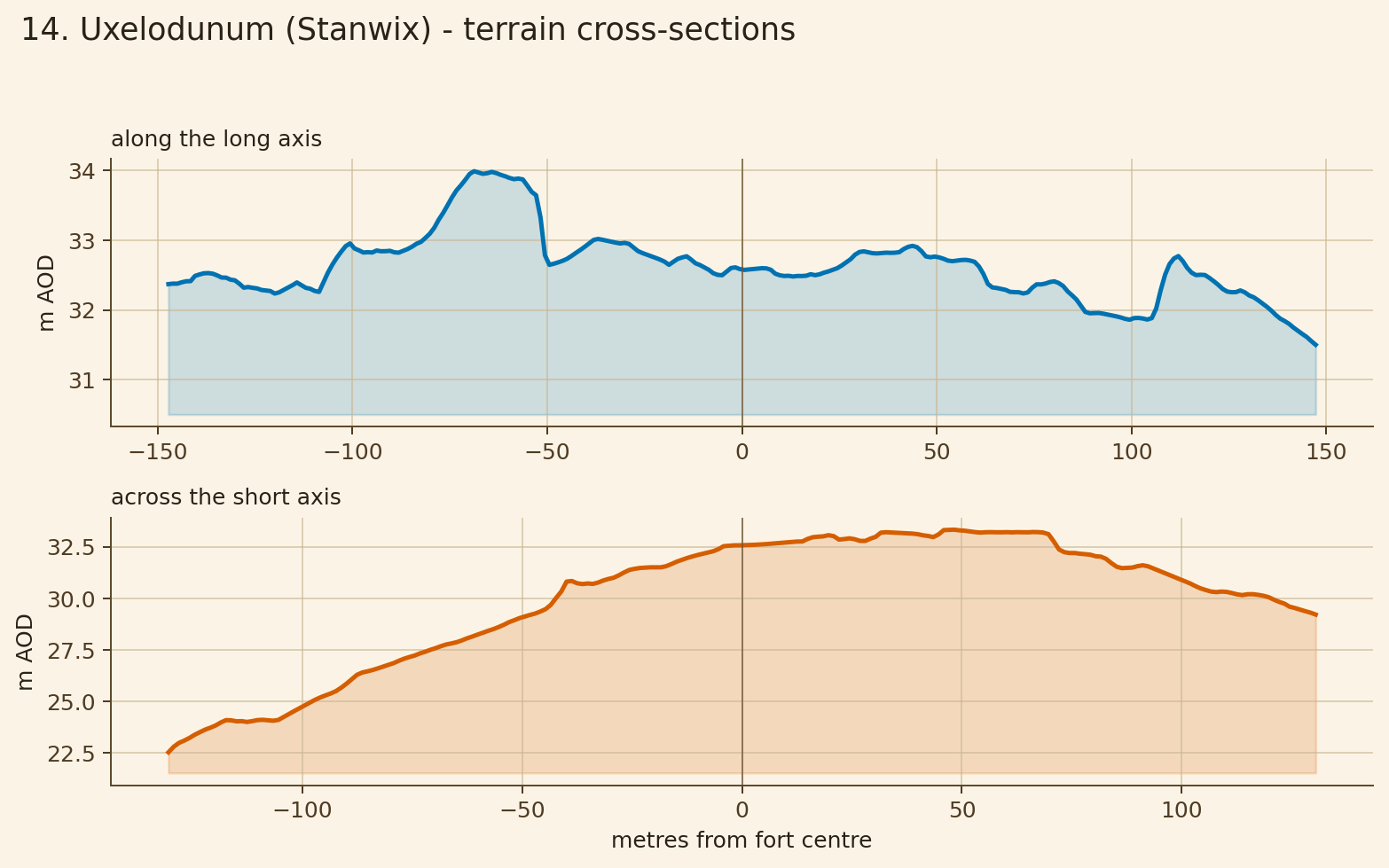
14. Uxelodunum Stanwix

gentler working platform

Challenge: Why might an engineer like this quieter piece of ground?

Height range
8.629 m
Slope
3.239%
Downhill
SE
Uxelodunum elevation mapUxelodunum humps and hollowsUxelodunum cross sections

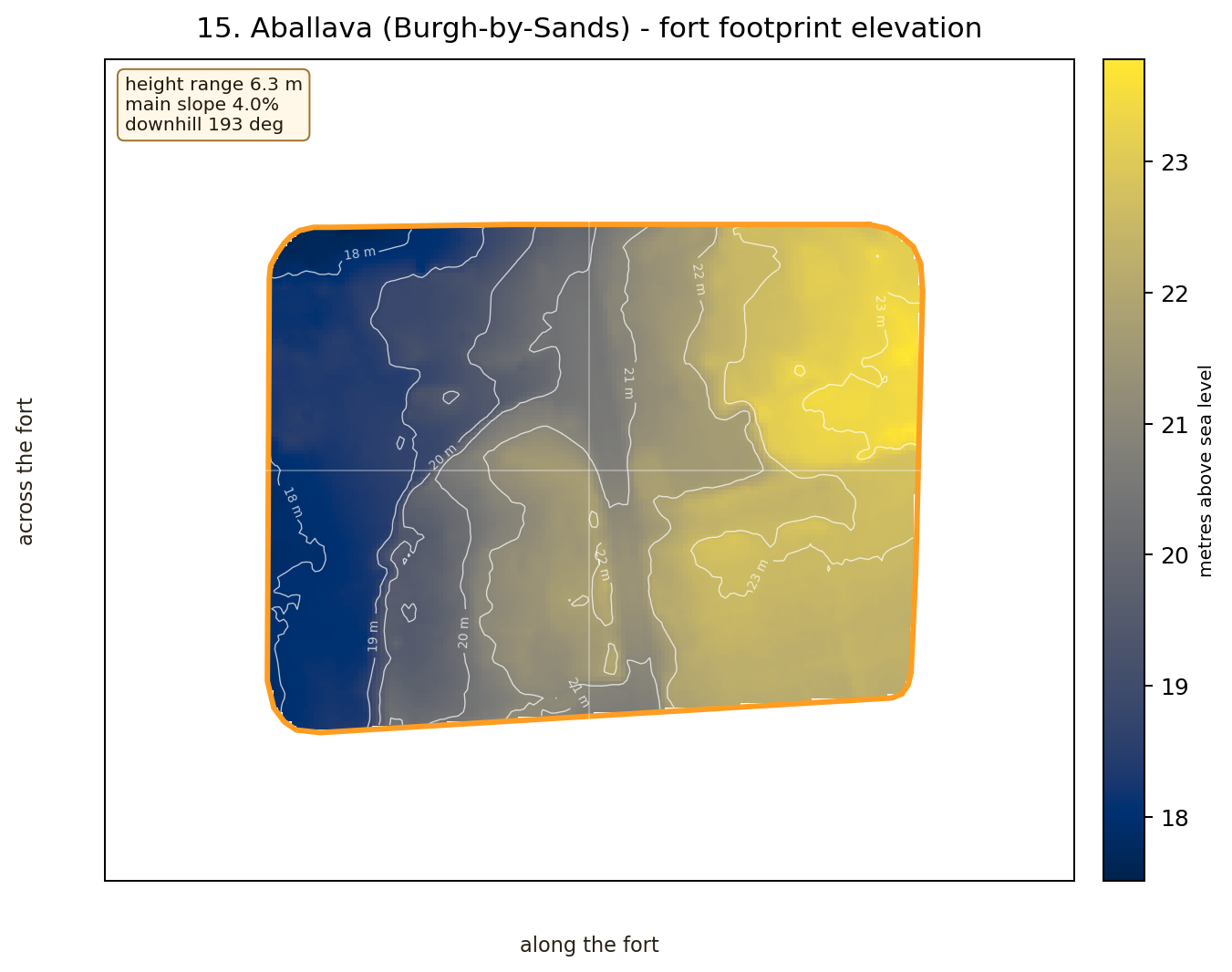
15. Aballava Burgh-by-Sands

gentler working platform

Challenge: Why might an engineer like this quieter piece of ground?

Height range
6.264 m
Slope
3.985%
Downhill
SSW
Aballava elevation mapAballava humps and hollowsAballava cross sections

16. Coggabata Drumburgh

gentler working platform

Challenge: Why might an engineer like this quieter piece of ground?

Height range
3.836 m
Slope
3.907%
Downhill
ENE
Coggabata elevation mapCoggabata humps and hollowsCoggabata cross sections

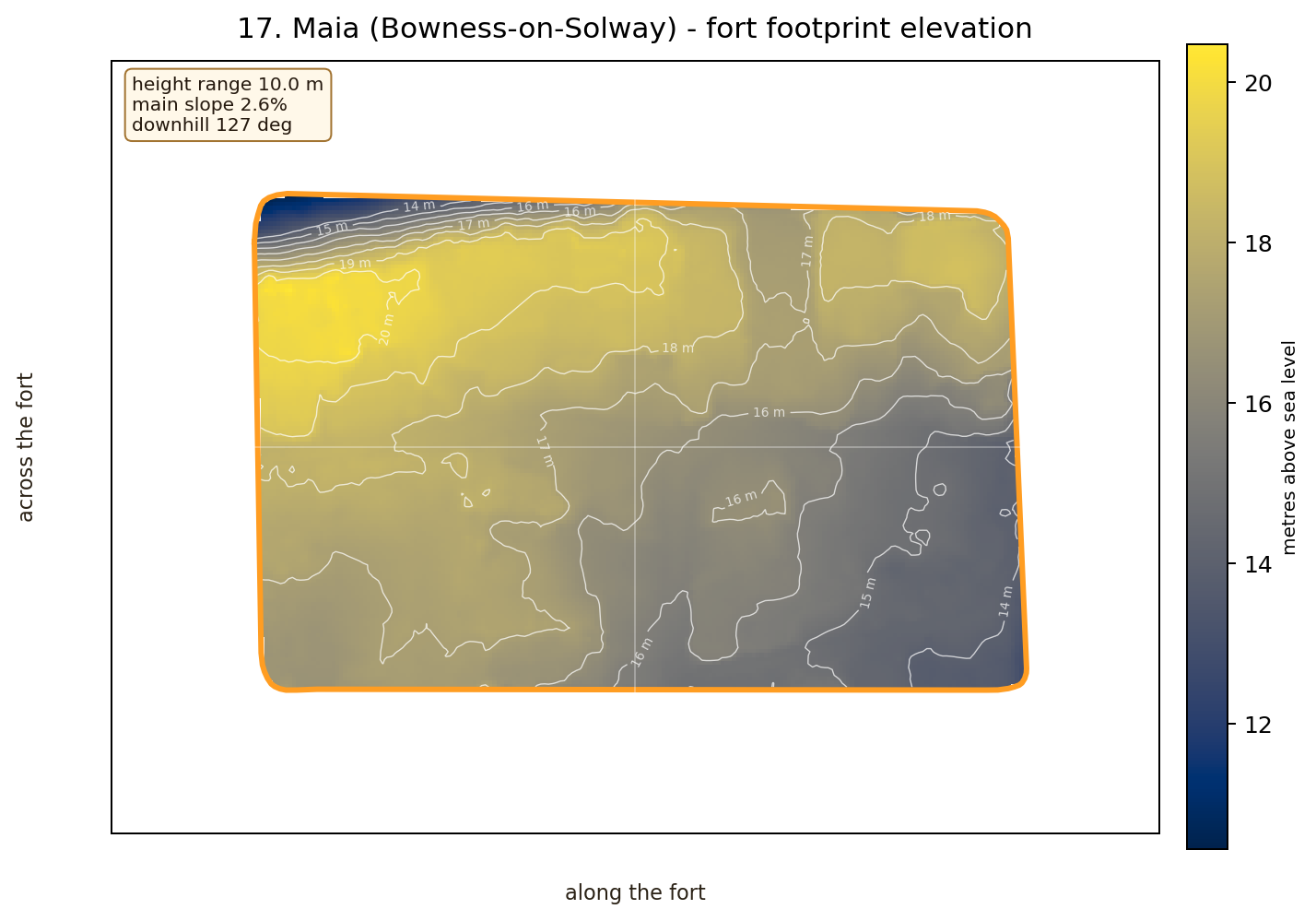
17. Maia Bowness-on-Solway

big height-change site

Challenge: Why choose this raised ground instead of somewhere flatter nearby?

Height range
10.026 m
Slope
2.612%
Downhill
SE
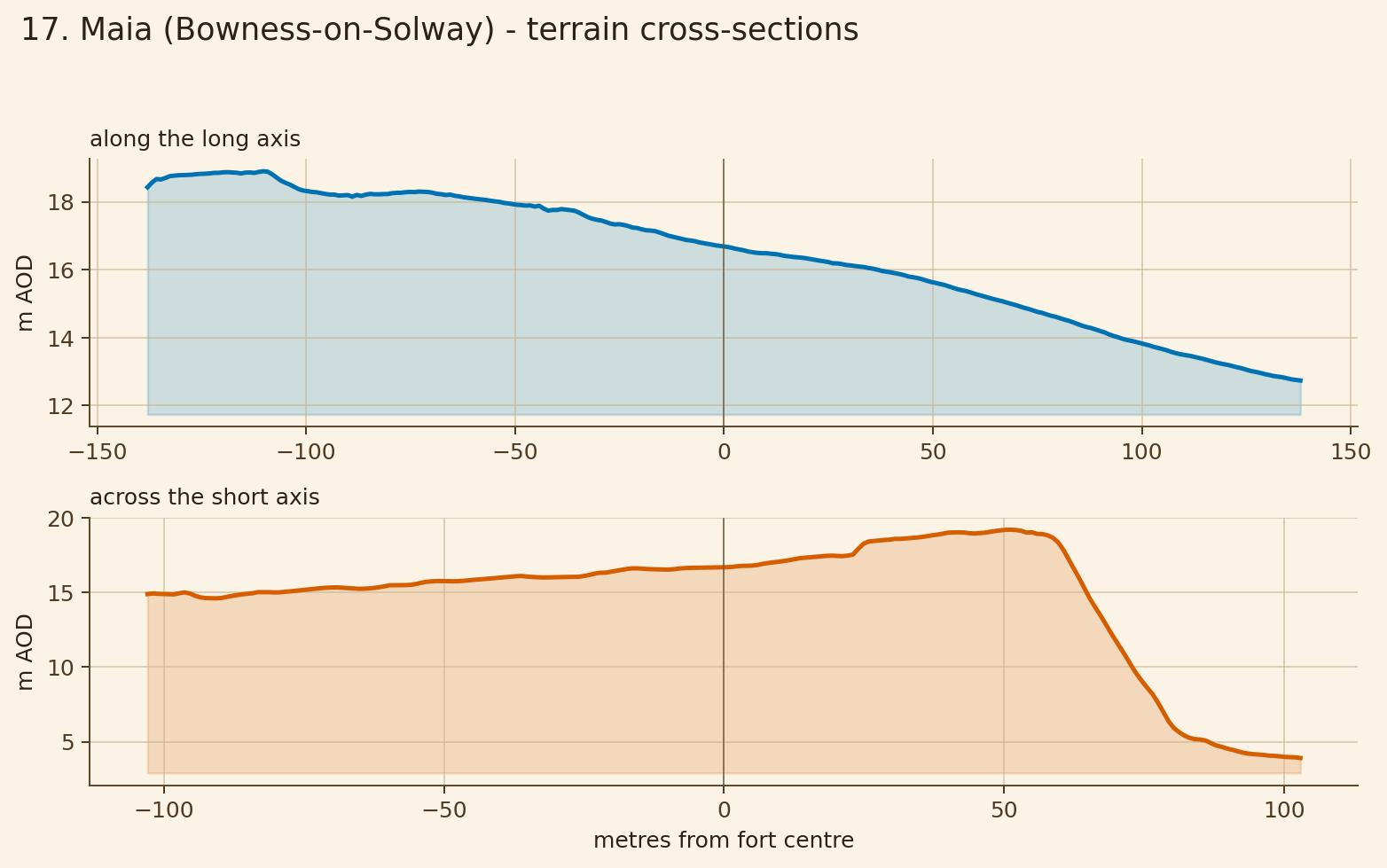
Maia elevation mapMaia humps and hollowsMaia cross sections

Roman Engineer Challenge

Give a child one fort card and ask them to be the Roman surveyor: where would the main street go, where should water drain, and why might this site have been chosen?

  1. Segedunum / Wallsend: Why might an engineer like this quieter piece of ground? Height range: 4.785 m; Main slope: 2.797%; Water would tend to run SE
  2. Pons Aelius / Newcastle: Which bumps might be older earthworks, later damage, or real Roman platforms? Height range: 16.441 m; Main slope: 2.745%; Water would tend to run ENE
  3. Condercum / Benwell: Which bumps might be older earthworks, later damage, or real Roman platforms? Height range: 9.159 m; Main slope: 2.029%; Water would tend to run SSW
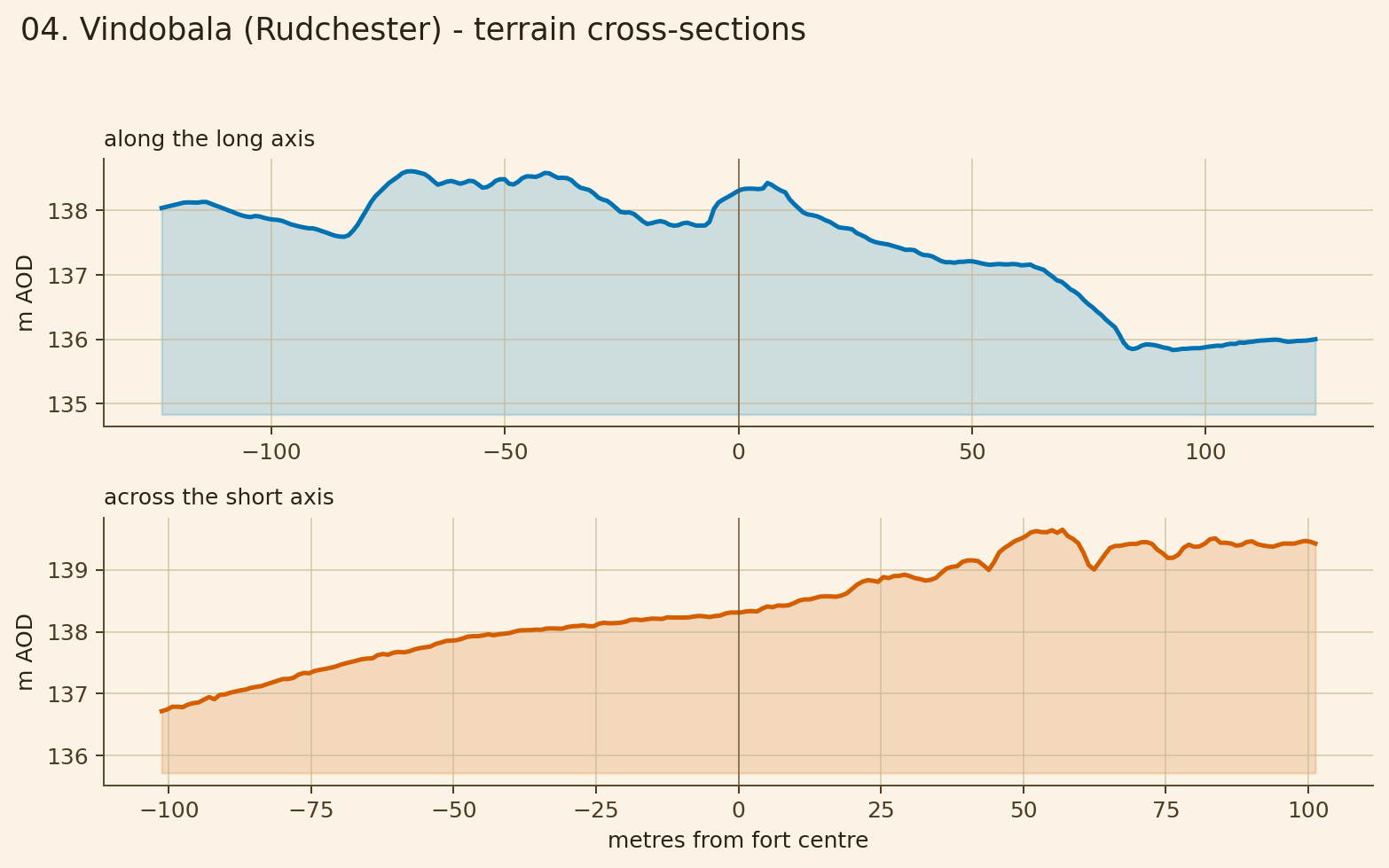
  4. Vindobala / Rudchester: Why might an engineer like this quieter piece of ground? Height range: 4.595 m; Main slope: 1.407%; Water would tend to run ENE
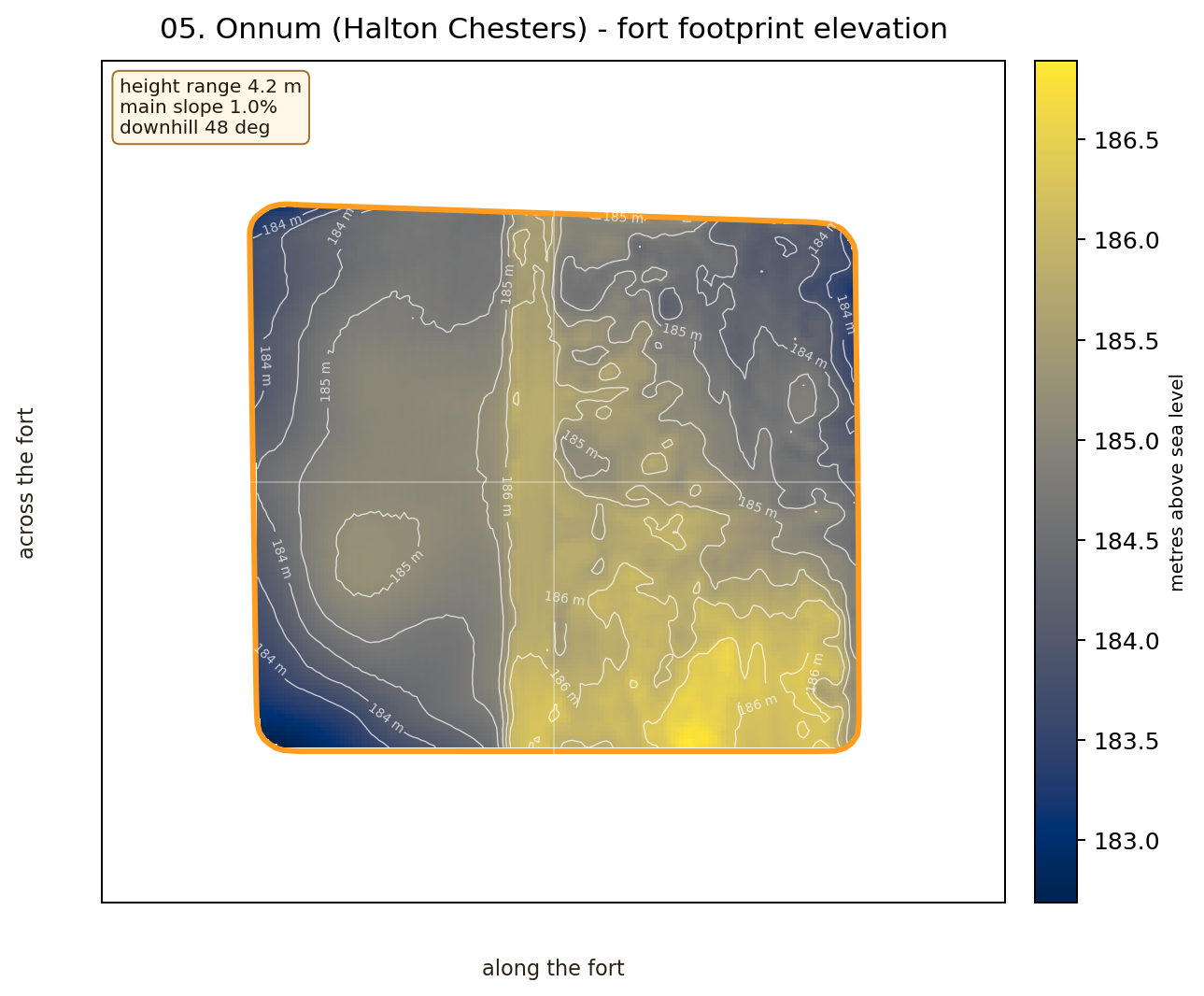
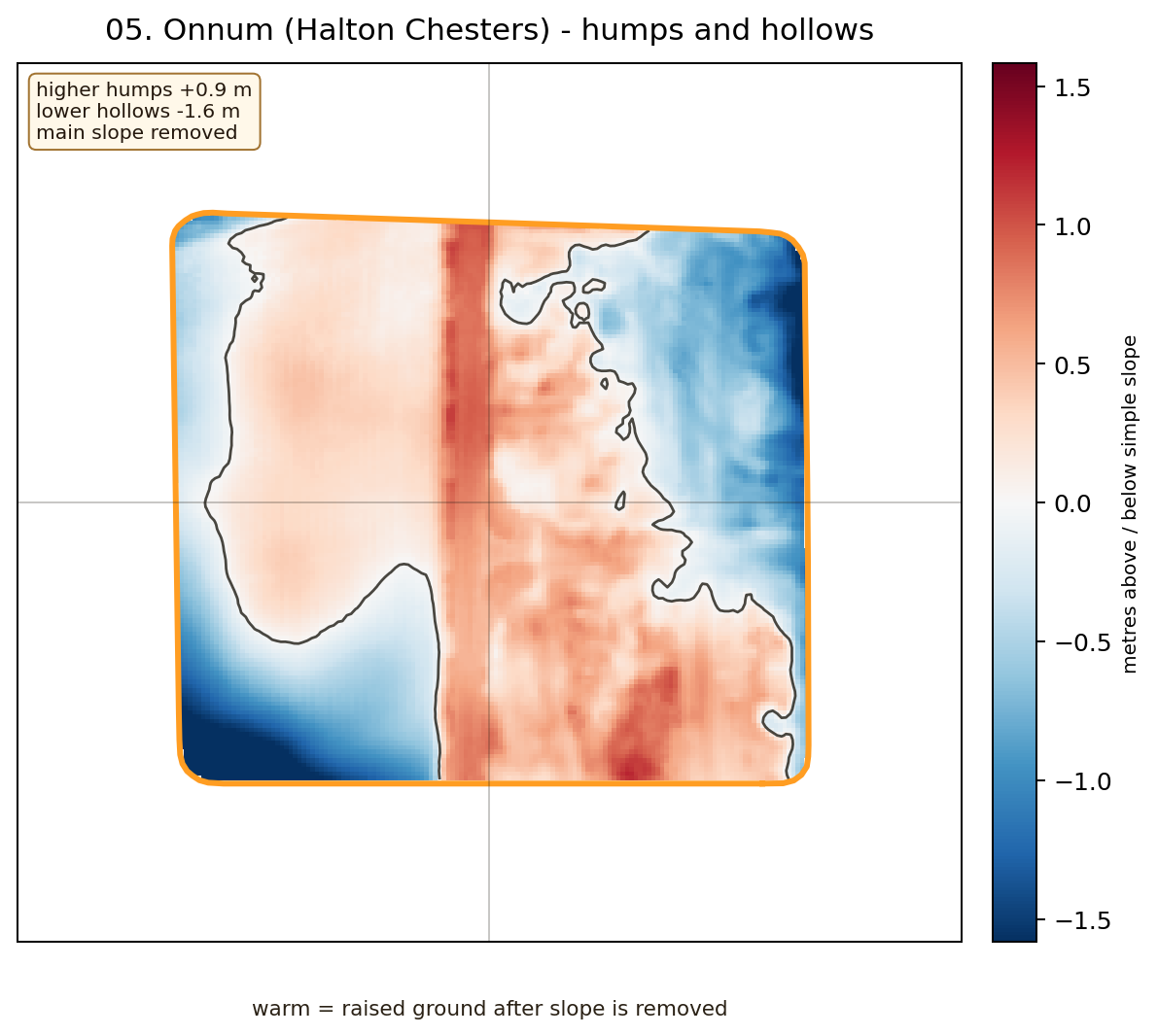
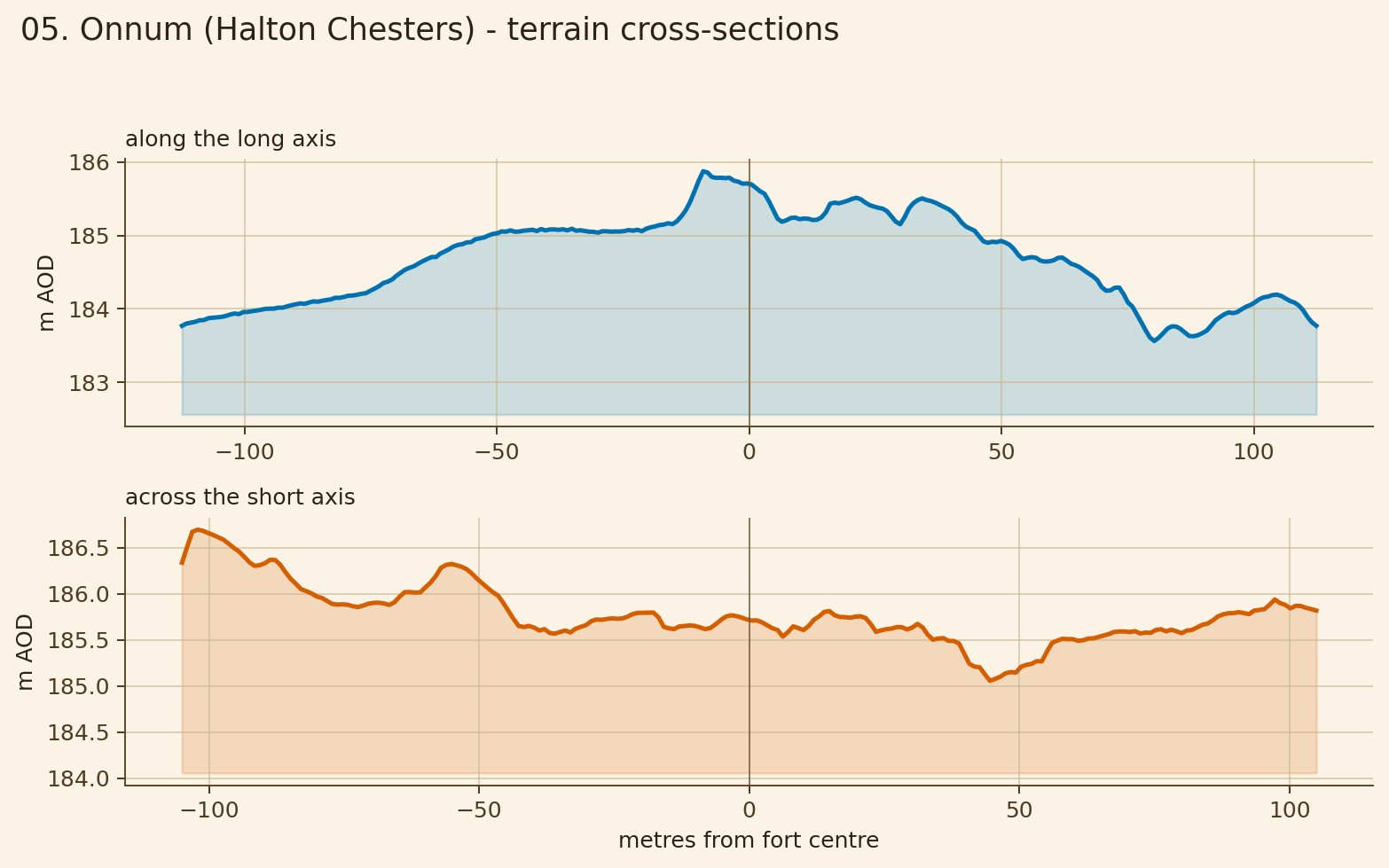
  5. Onnum / Halton Chesters: Why might an engineer like this quieter piece of ground? Height range: 4.205 m; Main slope: 0.953%; Water would tend to run NE
  6. Cilurnum / Chesters: Which gate or street would need the cleverest drain? Height range: 8.048 m; Main slope: 4.643%; Water would tend to run ESE
  7. Brocolitia / Carrawburgh: Which gate or street would need the cleverest drain? Height range: 8.151 m; Main slope: 4.191%; Water would tend to run WSW
  8. Vercovicium / Housesteads: How would you stop rainwater running straight through the streets? Height range: 22.891 m; Main slope: 11.816%; Water would tend to run SE
  9. Vindolanda / Chesterholm: Why might an engineer like this quieter piece of ground? Height range: 6.462 m; Main slope: 1.697%; Water would tend to run SSE
  10. Aesica / Great Chesters: How would you stop rainwater running straight through the streets? Height range: 9.421 m; Main slope: 8.175%; Water would tend to run SSE
  11. Magna / Carvoran: Which gate or street would need the cleverest drain? Height range: 11.455 m; Main slope: 4.502%; Water would tend to run SW
  12. Banna / Birdoswald: Why might an engineer like this quieter piece of ground? Height range: 8.79 m; Main slope: 2.32%; Water would tend to run NNE
  13. Camboglanna / Castlesteads: Why might an engineer like this quieter piece of ground? Height range: 7.147 m; Main slope: 0.616%; Water would tend to run W
  14. Uxelodunum / Stanwix: Why might an engineer like this quieter piece of ground? Height range: 8.629 m; Main slope: 3.239%; Water would tend to run SE
  15. Aballava / Burgh-by-Sands: Why might an engineer like this quieter piece of ground? Height range: 6.264 m; Main slope: 3.985%; Water would tend to run SSW
  16. Coggabata / Drumburgh: Why might an engineer like this quieter piece of ground? Height range: 3.836 m; Main slope: 3.907%; Water would tend to run ENE
  17. Maia / Bowness-on-Solway: Why choose this raised ground instead of somewhere flatter nearby? Height range: 10.026 m; Main slope: 2.612%; Water would tend to run SE
Sightline Science

This is deliberately labelled as a toy bare-earth model: it ignores towers, buildings, trees, weather and exact signal stations. It is useful as a question-generator, not a proof.

PairDistanceModel resultWorst blockage
Segedunum to Pons Aelius5.441 kmblocked33.884 m
Pons Aelius to Condercum3.526 kmblocked22.345 m
Condercum to Vindobala10.725 kmclear-1.833 m
Vindobala to Onnum11.561 kmblocked17.989 m
Onnum to Cilurnum8.727 kmblocked132.219 m
Cilurnum to Brocolitia5.362 kmblocked69.669 m
Brocolitia to Vercovicium7.328 kmblocked4.075 m
Vercovicium to Vindolanda3.116 kmblocked14.284 m
Vindolanda to Aesica6.692 kmblocked38.014 m
Aesica to Magna3.977 kmblocked2.78 m
Magna to Banna5.025 kmblocked1.516 m
Banna to Camboglanna10.703 kmblocked38.764 m
Camboglanna to Uxelodunum12.758 kmblocked14.221 m
Uxelodunum to Aballava7.61 kmblocked3.023 m
Aballava to Coggabata6.409 kmclear-1.93 m
Coggabata to Maia5.044 kmclear-1.256 m

Build The Wall Maths

A classroom rectangular-prism model only. It shows why assumptions matter before anyone starts quoting volumes as historical truth.

ScenarioWidthHeightVolumeStone mass model
narrow lower model1.8 m3.5 m846,468 m31,946,876 t
middle classroom model2.4 m4.5 m1,451,088 m33,337,502 t
broad tall model3.0 m5.0 m2,015,400 m34,635,420 t

Source honesty

Sources: Environment Agency 1 m DTM terrain mosaic, exact WallGIS fort polygon matches, and the current Walkers' Wall route spine. Terrain images and charts are science/education aids, not excavation reports. Keep attribution and caveats with any public use.